Small Moments, Big Impact: Why Supplemental Materials Matter More Than Ever

Updated: Apr 24

Every day, classrooms are filled with small, unforgettable moments. A quiet student finally raises their hand with confidence. A question sparks an unexpected discussion. A movie creates laughs—and understanding.
These moments may seem small, but they define how students connect with their learning and with each other. These sparks rarely show up in spreadsheets or test scores, yet they shape a student’s learning journey.
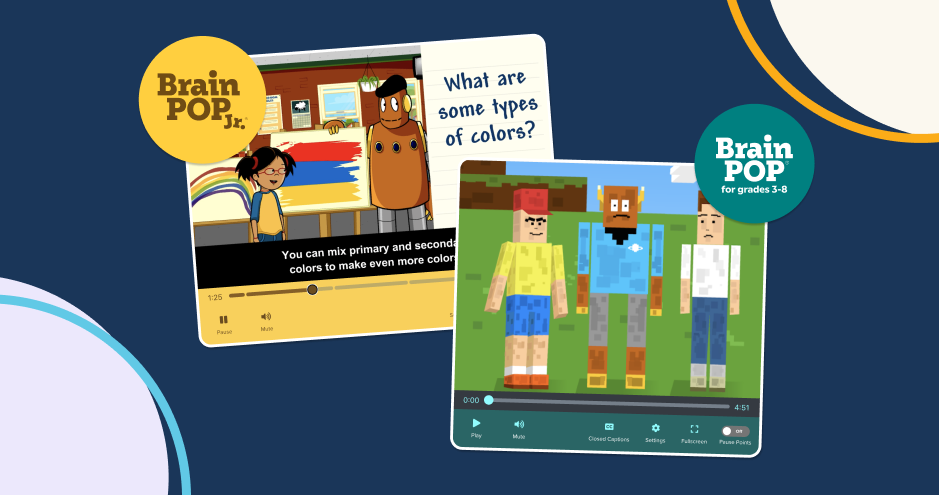
That’s why BrainPOP commissioned our latest white paper, Extra-Strength Education: How Supplemental Material Makes Learning Stronger. It challenges school and district leaders to rethink how they evaluate investments in learning tools, and to recognize the lasting impact that supplemental resources create in the classroom.
Why Leaders Should Look Closer at Small Moments
School and district budgets often prioritize core curricula and large-scale investments. But the true measure of success depends on what happens in everyday classrooms. Supplemental materials, or so-called “extras,” are often what transforms those big investments into meaningful student experiences.
This white paper offers district and school leaders:
A research-driven examination of supplemental materials and their role in effective learning.
Insights from educators and school leaders nationwide.
Practical guidance for evaluating the impact of supplemental resources in your school or district.
“Supplemental material promotes thinking and puts the learning back on the students, engages them, and keeps them moving forward… It’s a magic link that keeps connecting everything.”
Here’s a preview of what you’ll find inside:
Why Supplemental Materials in Education are Essential
They’re not just "extras." High-quality supplemental tools spark those “aha” moments, strengthen engagement, and connect lessons to real-world experiences. They support inquiry, experimentation, and address diverse learning needs in ways core curricula can’t.
The Best Classrooms are Often the Loudest
Noisy, hands-on classrooms fueled by supplemental tools, are often where learning sticks. Students debate, experiment, and collaborate, moving away from passive, lecture-based learning. “Supplemental material promotes thinking and puts the learning back on the students, engages them, and keeps them moving forward… It’s a magic link that keeps connecting everything.”
What Makes Supplemental Materials High-Quality?
The strongest resources are aligned to standards, flexible for teachers, inclusive for diverse learners, and so engaging that students talk about them beyond the classroom.
Navigating the "Goldilocks Effect" in Choosing Supplemental Resources
Not all resources are created equal. Decision-makers must strike a balance between accessibility and reliability, choosing flexible, teacher-driven tools that fit their district’s unique needs.
Value Beyond Simple Metrics
Eagerness to measure outcomes shouldn’t come at the expense of overlooking other parts of the learning equation. Supplemental materials do more than raise test scores or drive usage, they foster curiosity, support differentiation and equity, and build lifelong learning. Leaders who rely only on what’s easiest to measure risk undervaluing what matters most.
Teacher Support is the Best Investment
Teachers need support to use supplemental materials effectively without adding to their workload. As one principal put it, “When we have so many initiatives and so many new tools, the cognitive load for the teachers is overwhelming. They don’t know how to use any of them, so it defeats the purpose. This is especially true for technology, and we try really hard to provide good professional development for leaders so that they can learn how to vet different types of tools.”
Supplemental Materials Address Diverse Student Needs and Bridge Gaps
By building background knowledge and creating active learning experiences, supplemental resources help level the playing field for all learners—and fill gaps that core curricula often leave behind.
Voices Behind the White Paper
This paper is grounded in the expertise of educators and school leaders across the country. Their perspectives inform and shape the insights you’ll find inside.
Trevon Adams, Assistant Principal, Park Slope Collegiate (New York, NY)
Leigh Ann Bradshaw, Former Associate Superintendent (Winter Park, FL)
Jean-Claude Brizard, President and CEO of Digital Promise
Rebecca Gratz, Instructional Facilitator of Computer Science, Loudoun County Public Schools (VA)
Dr. Melissa Kanney, English Language Development Supervisor, Prince George’s County (MD)
Dr. JP Keener, Science/STEM Director and Curriculum Supervisor, Broward County Public Schools (FL)
Julie Kuzma, Instructional Facilitator of Technology, Loudoun County Public Schools (VA)
Jaclyn Patanio, Director of Education Technology, NYC Public Schools (Staten Island, NY)
Amanda Young, Principal, Education Imagine Academy (Wichita, KS)
Rethinking Value in Education
When school and district leaders make purchasing decisions, success depends not only on hard data but also on the small, everyday moments that ignite curiosity, build confidence, and make learning last.


Comments