BrainPOP Science: From Sticky Notes to Scientific Thinking

Building the confidence and inquiry skills students need most.
I can still picture the room.
A small group of us stood surrounded by walls covered in sticky notes—nearly 500 BrainPOP 3-8 science topics! We moved them, regrouped them, and debated where they belonged. Each sticky note represented a BrainPOP topic that teachers use to introduce science concepts, build knowledge, and spark students' curiosity. Seeing the full collection laid out made one thing clear: BrainPOP already had deep, wide-ranging science content to build from.
As science education continued to evolve, we saw an opportunity to build on that foundation.
What would it look like to help students not only learn science concepts, but also think and work like scientists? How could we extend BrainPOP's trusted science content into deeper investigations, where students ask questions, analyze evidence, use models, and explain their ideas?
We weren't just organizing content. We were imagining how BrainPOP could support the next dimension of science learning.
That work became the beginning of BrainPOP Science.
A System at a Crossroads
That future has arrived.
And the 2024 National Assessment of Educational Progress (NAEP) science results send a clear message: science education in the United States is at a crossroads. Scores declined nationwide, reversing years of progress since 2019. More than a metric of academic performance, these results signal that many students are not developing the fundamental skills needed for success in future STEM learning and careers.
The data for eighth graders points to a broad, systematic challenge:
Widespread decreases: Scores dropped across all performance levels, from the 10th to the 90th percentile.
Declines across content areas: Scores fell in physical science, life science, and Earth and space sciences.
Fewer students reaching proficiency: The percentage at or above the NAEP Proficient level fell to 31%.
Increases in students performing below NAEP Basic level: The percentage rose to 38%.
A reemerging gender gap: Male students outperformed female students by 2 points.
To reverse this national slide, we must abandon traditional, fact-driven instruction and embrace a curriculum that cultivates a genuine scientific mindset—the ability to think critically, reason with evidence, and pursue future careers in innovation.
Addressing this challenge requires more than covering content. It calls for a shift toward multidimensional science teaching and learning, where students integrate disciplinary core ideas (concepts) with scientific and engineering practices and crosscutting concepts.
BrainPOP Science is designed to support that shift, offering a clear, flexible structure for teachers and an inquiry-driven approach that engages students in investigating real-world phenomena, developing and testing ideas, and communicating their thinking and scientific arguments with evidence.
Rebuilding Scientific Thinking: Insights from BrainPOP's Product Strategy Director
To better discuss this shift, I spoke with Michelle Newstadt, Ph.D., BrainPOP’s Product Strategy Director for Impact and Efficacy, who helped lead the development of BrainPOP Science.
What are you hearing from science educators right now? What challenges are coming up most often in their classrooms?
A big opportunity, especially in early middle school, is helping students build the background knowledge and vocabulary they need to engage deeply with science. Because science is not always taught daily in the same way as ELA and math, middle school science may be one of students’ first sustained opportunities to explore science in depth. Students may recognize terms, but they also need meaningful ways to use those ideas: asking questions, analyzing evidence, making connections, and explaining their thinking.
In later grades, teachers are helping students build toward more complex science learning while also preparing them for high school STEM and summative assessments.
BrainPOP Science supports that work by giving students structured opportunities to move beyond memorization and then apply it through scientific practices such as analyzing data using evidence, developing explanations, and making real-world connections.
Over time, those experiences help students build a lasting foundation of science knowledge, critical thinking, and scientific practices.
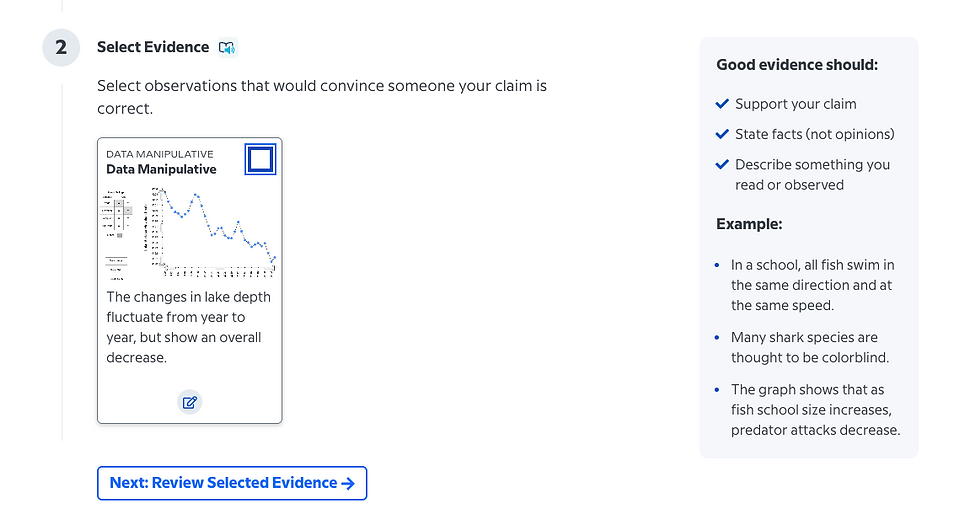
BrainPOP Science supports teachers in weaving literacy into science learning, so students build knowledge while also learning to read, write, and communicate like scientists. Literacy support is embedded directly into investigations, rather than treated as separate from science. Through its Claim-Evidence-Reasoning (CER) framework, students read closely, write about their ideas, and use evidence to support their thinking. They practice these skills in context as they make sense of science concepts and communicate their knowledge and understanding.
How was BrainPOP Science designed to address these challenges? What does that look like in practice for teachers and students?
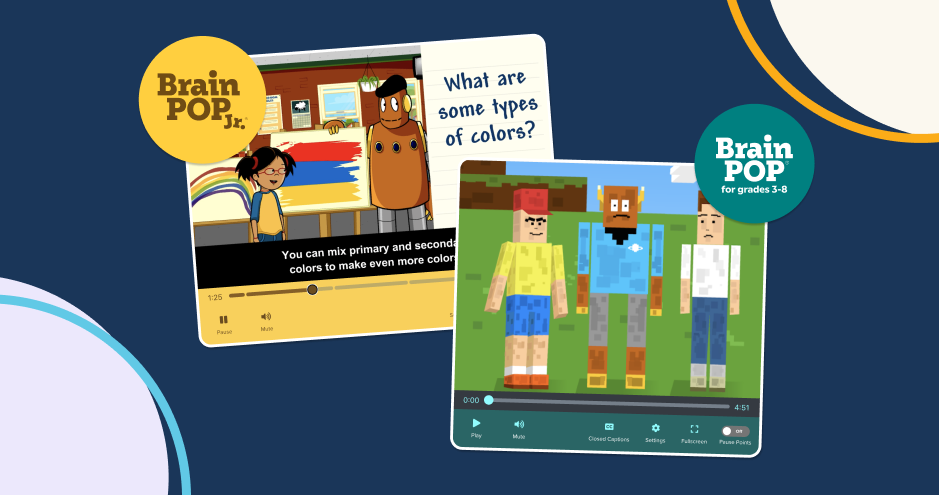
BrainPOP 3-8 science topics help spark students’ curiosity and build background knowledge. BrainPOP Science extends that foundation into a multidimensional science experience, giving students opportunities to investigate phenomena, apply scientific practices, and deepen their understanding. It gives learners multiple entry points for exploring, investigating, and making sense of science.
Each investigation and unit progresses from concrete to more abstract ideas, allowing students to engage from their starting point. As students move through investigations, they develop and apply knowledge—and they apply it whether they are encountering concepts for the first time or deepening existing understanding.
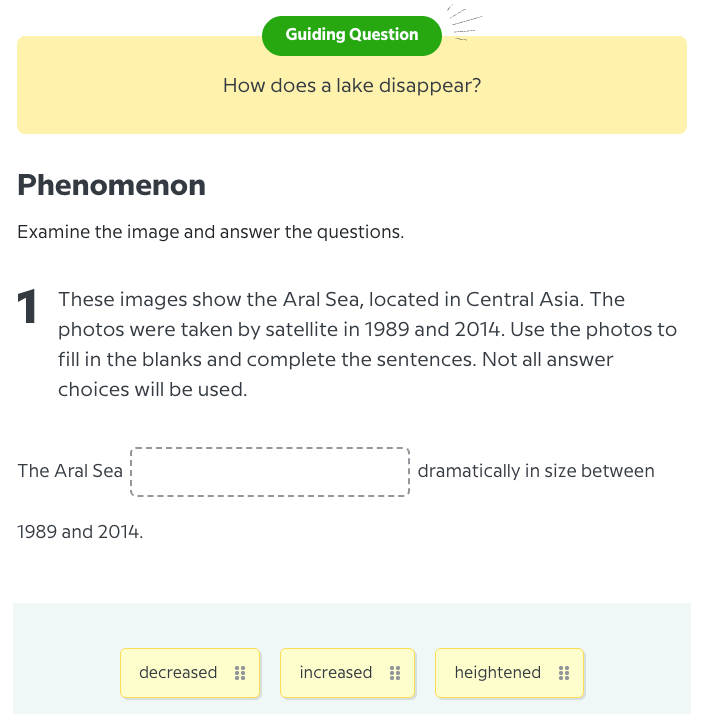
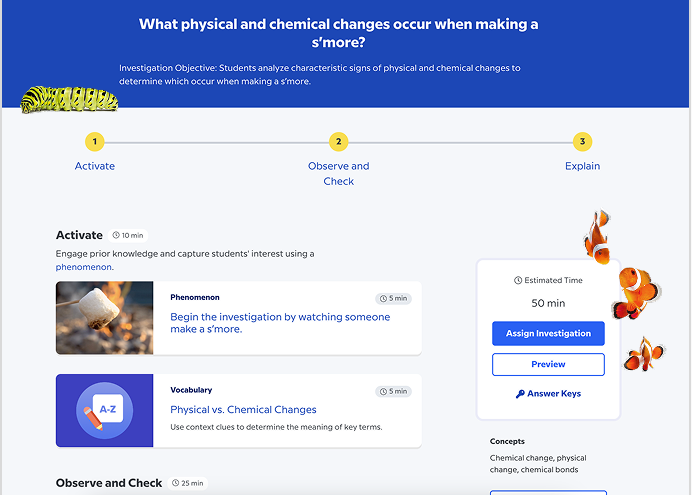
Every investigation begins with a real-world phenomenon and a Guiding Question, such as “How does a lake disappear?”
This creates a shared entry point and gives students a clear purpose for learning.
Supports are built in throughout the investigation, including vocabulary exposure, visual models, scaffolds, and BrainPOP movies that teachers can use as needed.
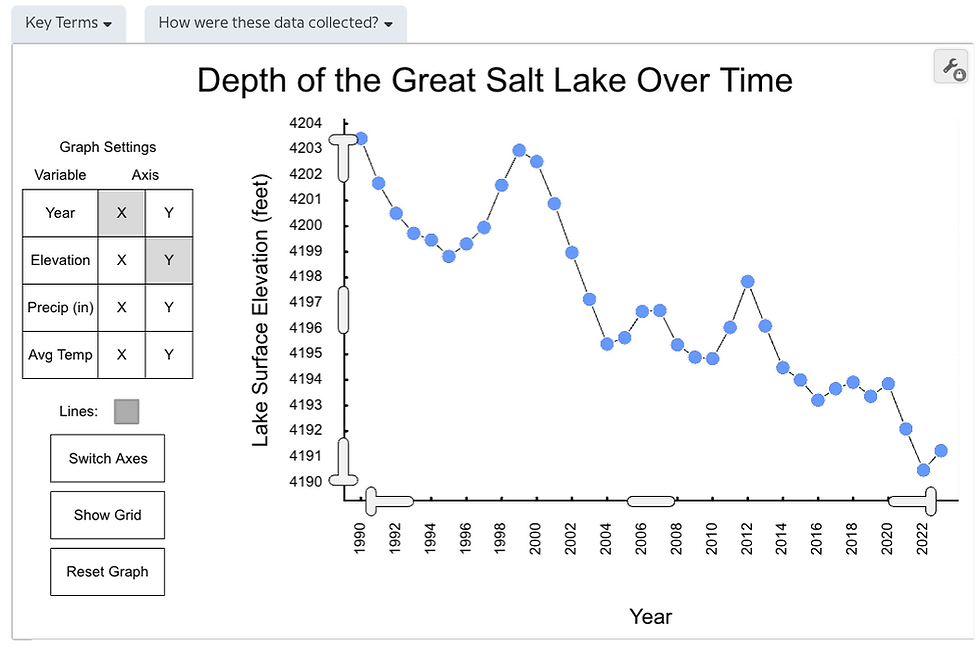
At the same time, the structure remains flexible, allowing teachers to guide learning while still giving students agency.
A key part of the experience is helping students use evidence to develop ideas. They draw on data, simulations, and texts to build and justify their thinking.
What are you seeing in the research when it comes to how BrainPOP Science supports diverse learners, particularly English Language Learners?
In our research, we’ve seen some of the strongest gains among English Language Learners.
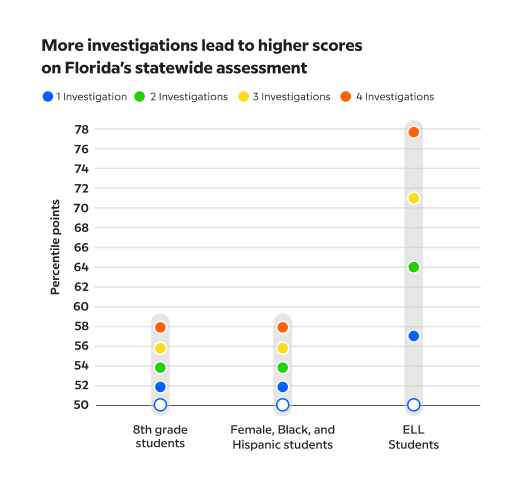
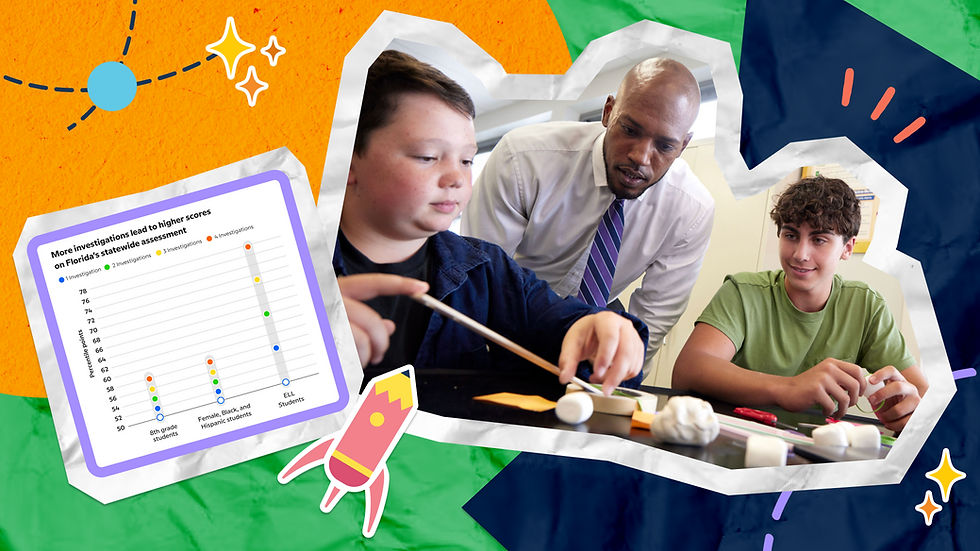
In one Florida study, each BrainPOP Science investigation completed was associated with a 7 percentile point increase on a state science assessment.
A big part of that is how vocabulary is built into the experience. It’s introduced in a low-stakes way and revisited throughout, giving learners multiple opportunities to encounter and use new language as they build and apply understanding over time.
Students also have multiple ways to engage with content, including visuals, simulations, and data. Built-in supports like translation tools, Immersive Reader, closed captioning, and transcripts help them access grade-level content while continuing to develop language skills. Rather than only reading about scientific concepts, students see them in action and interact with them directly. They “do” science.
What role do early science experiences play in helping more students—especially underrepresented groups—stay engaged in STEM?
Early experiences are what spark curiosity. You can see it when students encounter something new and want to learn more. It’s that “aha” moment of “I didn’t know that, I want to learn more.”
For underrepresented groups, that early sense of interest and confidence can be especially important. Findings from the Florida BrainPOP Science study show that students across groups, including female, Black, and Hispanic students, saw positive outcomes, highlighting the impact of engaging, inquiry-based experiences.
That impact is driven in part by encouragement and visibility. Underrepresented groups often benefit from encouragement from educators and families to stay engaged in STEM. Research on girls in STEM, for example, highlights how that support can shape long-term interest and engagement. Representation also plays a key role. When students see themselves reflected in what they’re learning and in who participates in science, they are more likely to imagine a place for themselves in it.
BrainPOP Science also creates opportunities for students to build confidence in a low-stakes, risk-free way. Throughout each investigation, frequent checks for understanding, scaffolded observations, and items that mimic high-stakes assessments allow students to refine their thinking, strengthen their claims, and become familiar with performance tasks.
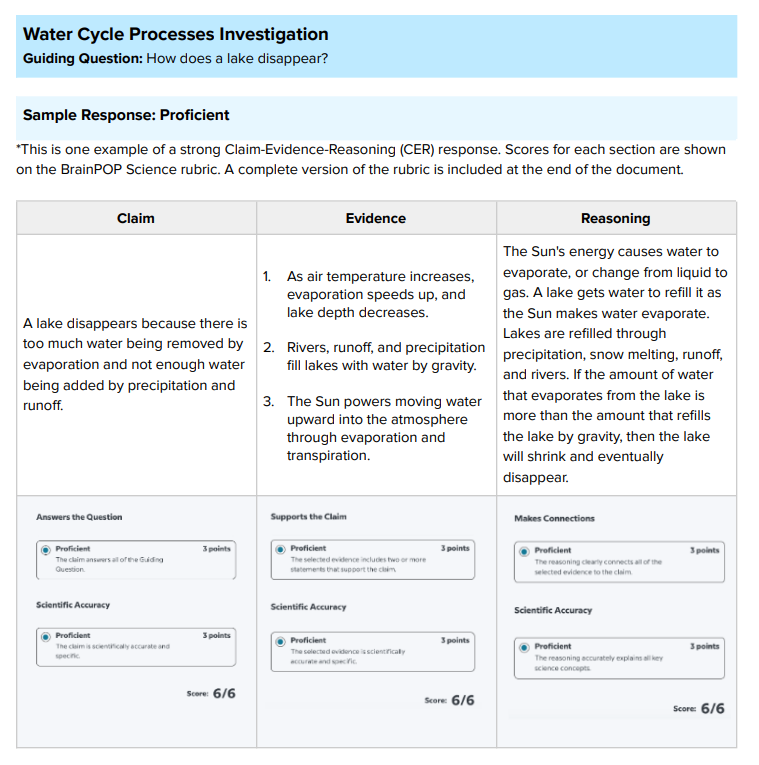
The built-in CER rubric supports this process, helping teachers guide students as they develop their reasoning. Working with data, models, and simulations further encourages exploration, allowing students to test ideas, take risks, and learn through the process.
Hands-on, inquiry-based experiences matter too. BrainPOP Science gives students opportunities to engage in the engineering design process: asking questions, defining problems, imagining solutions, testing ideas, and revising based on evidence.
Through that kind of active involvement, students develop a sense of ownership and begin to see themselves as participants in science, not just observers.
Download your own CER rubric
Looking ahead, what gives you the most optimism about the future of science education?
When students are actively engaged in science, when they’re investigating, questioning, and making sense of ideas, you can actually see the thinking happening.
Rigor doesn’t have to be boring. Students can engage with challenging content in ways that are meaningful and exciting—and that kind of engagement is what supports deeper learning and lasting, lifelong impact.
"When we set high expectations and give students the right opportunities, they rise to meet them."
More Than a Product. A Shift in Thinking.
What began as a wall of sticky notes has become something much bigger.
BrainPOP Science wasn’t created just to deliver content. It was built to help students engage in scientific thinking, moving from memorizing science to actively making sense of it and sparking the curiosity to learn more
And that shift matters now more than ever.
Students need more opportunities to build confidence, engage in inquiry, and make sense of the world around them.
When those opportunities are in place, the impact goes beyond a single lesson or assessment. Students don’t just perform better. They build higher-order thinking skills, make connections that last, and begin to see themselves as capable learners.
To see this approach in action, explore a sample BrainPOP Science investigation and discover how students move from curiosity about a real-world phenomenon to asking questions, gathering evidence, developing ideas, and explaining their thinking.
Jackie Glassman is a content strategist who builds meaningful learning experiences that meet K–8 students where they are. She was part of the early team that helped shape BrainPOP Science when it was still just a kernel of an idea. Jackie blends rigor, empathy, and creativity to develop standards-aligned, culturally responsive curriculum rooted in how students truly learn. She is also a dedicated yogi, and her favorite character will always be Moby.


Comments