How BrainPOP Science Boosted Florida Science Scores

In just 2.5 months, students who completed BrainPOP Science investigations saw meaningful gains on Florida's statewide science assessment, with especially strong results for multilingual learners.
For middle school science teachers, preparing students for a state assessment can feel like a race against the clock.
There are standards to cover, concepts to teach, and scientific practices to build. At the same time, teachers are supporting learners with a wide range of needs. And when the testing window is approaching fast, there isn't always time to redesign a unit, introduce a new instructional routine, or add a separate test-prep program.
A BrainPOP Science study in Florida examined the relationship between BrainPOP Science use and performance on the spring 2024 Florida Statewide Assessment (FSSA). The study included 7,555 eighth-grade students across 32 middle schools in one district.
The findings were striking: students who completed more BrainPOP Science investigations tended to score higher on the state assessment. The pattern held across student groups, with especially strong gains among multilingual learners.
So what was it about these investigations that may help build assessment readiness?
From test prep to scientific thinking
Assessment readiness doesn’t have to mean sacrificing meaningful science instruction. Students can build readiness by actively working with scientific ideas, evidence, and explanations.
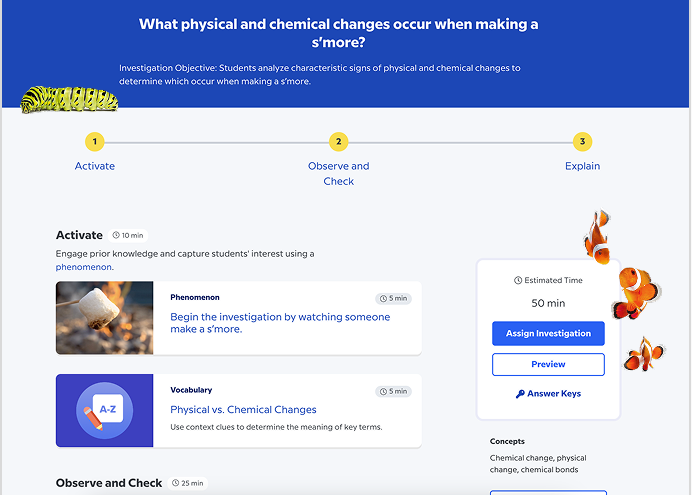
BrainPOP Science builds multidimensional science into its investigations. Students actively explore phenomena, analyze data and collect observations, and use those observations as evidence to explain their thinking as they move through a purposeful three-part arc: Activate, Observe & Check, and Explain. Teachers guide and support that work along the way. Students build knowledge and vocabulary, gather evidence, and develop the reasoning needed to make sense of the science and construct a scientific argument.
This three-part structure gives students repeated practice with the thinking required on science assessments as part of everyday science instruction.
Here’s what that looks like in practice:
Activate with accessible phenomena
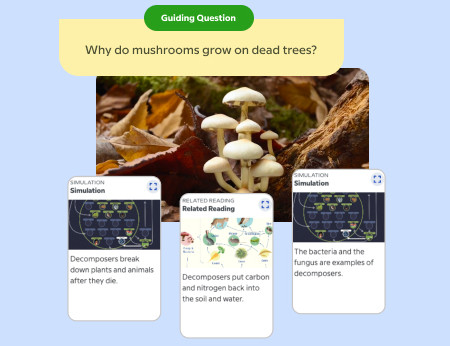
Every investigation begins with a question designed to spark curiosity such as Why are some mountains still growing? or Why do icebergs float?
Authentic phenomena give students a shared way into the science and a reason to talk, wonder, observe, and investigate.
That accessibility matters. Before students begin working with more complex texts, data, simulations, and scientific evidence, the phenomenon helps ground their thinking and gives them a clear purpose for investigating.
Vocabulary is also introduced early, giving students repeated opportunities to work with new terminology throughout the investigation. For multilingual learners and striving readers, that early foundation can make it easier to participate in discussion and engage with more complex scientific ideas.
Observe and check with multimodal data and assessment-aligned checkpoints
Next, students move from wondering to investigating.
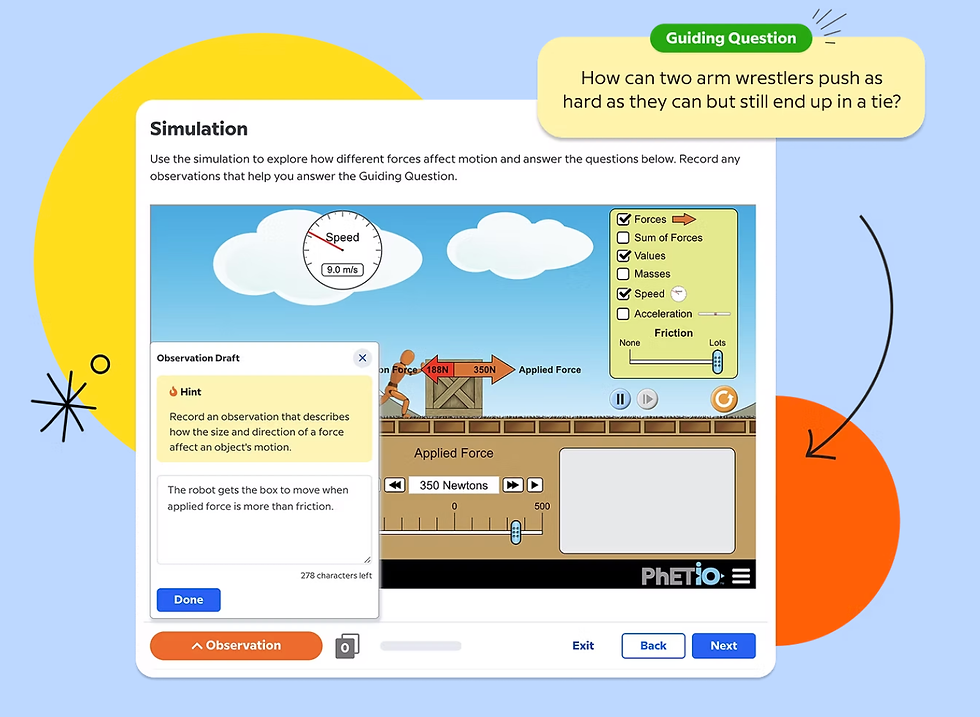
BrainPOP Science uses simulations, data manipulatives, readings, and other scientific sources to help students observe patterns, gather evidence, and refine their ideas.
Rather than simply watching science happen on a screen, students interact with models and data and use what they observe to make sense of the phenomenon.
Built-in checkpoints give students repeated opportunities to gauge their understanding as they go, while giving teachers timely data to spot misconceptions, adjust instruction, and target support. Students also practice with assessment-aligned stimuli and questions that mirror the kinds of thinking they'll need on state tests. These questions may ask students to interpret scientific texts, graphs, and data tables.
That means assessment preparation can happen within science instruction itself, as students practice interpreting information, connecting ideas, and using evidence to support their thinking.
Explain and synthesize through embedded CER
Each BrainPOP Science investigation culminates in a scientific argument structured around Claim-Evidence-Reasoning (CER), and students build toward it from the start. As they move through simulations, readings, observations, and checkpoints, they gather the knowledge, evidence, and language they need.
By the time students reach the final CER, they're prepared to make a claim, support it with relevant evidence, and explain their reasoning with confidence.
Because literacy is woven throughout the investigation, students also practice vocabulary development, reading comprehension, data interpretation, discussion, and argumentative writing.
The results: gains across student groups
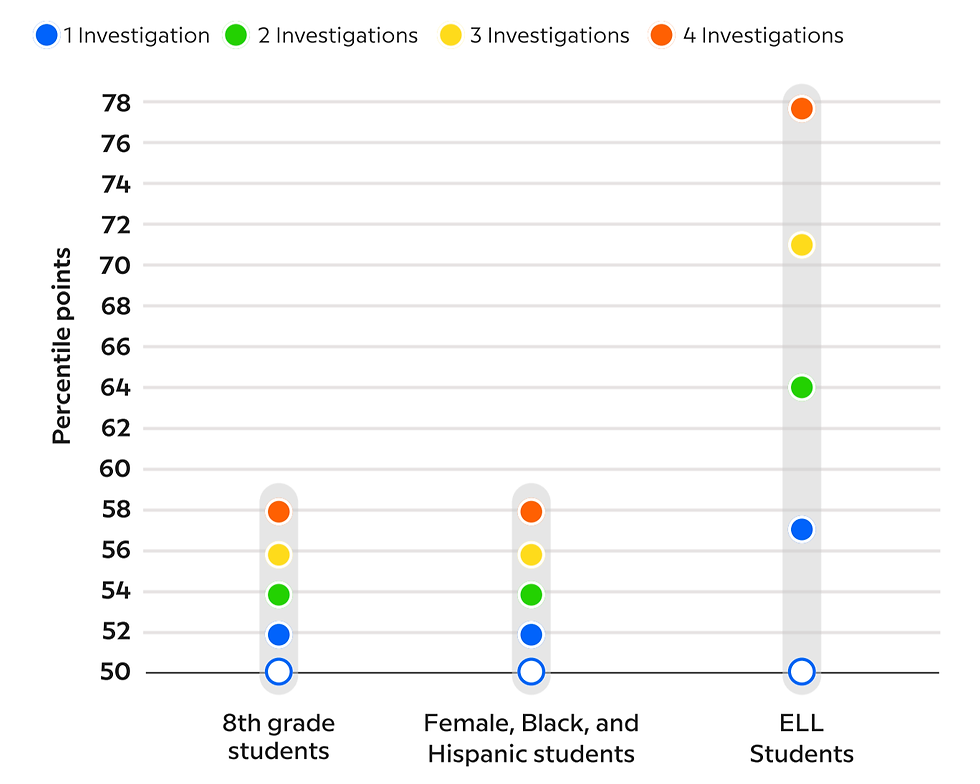
The Florida study showed a clear pattern: students who completed more BrainPOP Science investigations tended to earn higher scores on the state assessment.
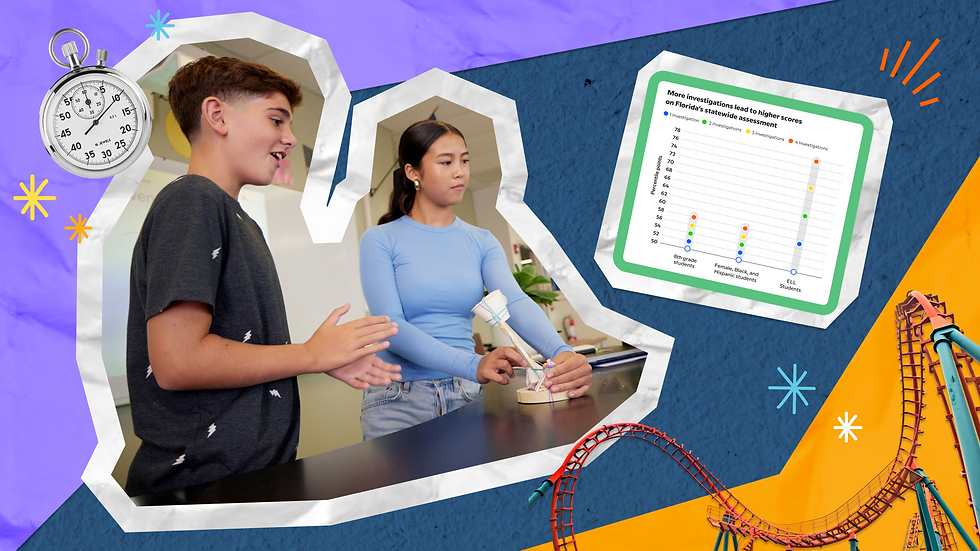
Across the full eighth-grade sample, each completed BrainPOP Science investigation was associated with an average 2 percentile point increase on the state summative assessment.
The analysis also found significant gains among female, Black, and Hispanic students, groups traditionally underrepresented in STEM.
But the strongest results appeared among Multilingual Learners, who saw a 7 percentile point increase per investigation completed.
The way BrainPOP Science supports access and participation may help explain why multilingual learners benefit from this kind of instruction. Students have multiple ways to engage with scientific ideas through visuals, simulations, data, and text. Vocabulary is introduced in context and revisited throughout the investigation, while built-in supports such as translation tools, Immersive Reader, closed captioning, and transcripts help students access grade-level science as they continue developing academic language.
Rather than relying only on text to understand a concept, students can see it, interact with it, discuss it, and then use scientific language to explain what they know.
Three takeaways for science educators and district leaders
The Florida study offers a few practical lessons for schools preparing students for high-stakes science assessments.
Use targeted investigations strategically.
Meaningful gains were associated with completing individual investigations, even within a 2.5-month implementation window. Short, focused investigations can give students repeated practice with scientific practices without requiring teachers to redesign instruction, while auto-graded checkpoints provide timely data to help target support and guide next steps.
Scaffold for multilingual learners.
Visuals, simulations, vocabulary support, and other multimodal resources can help students build conceptual understanding before they are asked to express that understanding in a final scientific argument. That kind of support may be especially valuable for multilingual learners as they develop both science knowledge and academic language.
Make CER part of everyday science.
Embedded Claim-Evidence-Reasoning prompts give students repeated practice gathering evidence, developing claims, and explaining their reasoning, helping connect everyday science instruction to the kinds of thinking and writing required on state assessments.
Building readiness by building scientific thinkers
The Florida results are especially significant given the short implementation window. The study notes the potential for even greater impact with continued use of BrainPOP Science throughout grades 6–8.
But assessment performance is only part of the picture. BrainPOP Science is designed to help middle school students think critically, work with evidence, and communicate scientific ideas while giving teachers ready-to-go lessons that bring science concepts and practices together.
When students regularly investigate meaningful questions, analyze evidence, and explain their reasoning, they’re building skills that support both assessment readiness and deeper science learning. They’re also building the confidence and habits of mind to take on new scientific questions with an “I can figure this out” mindset.
Jackie Glassman is a writer and content strategist who builds meaningful learning experiences that meet K–8 students where they are. She was part of the early team that helped shape BrainPOP Science when it was still just a kernel of an idea. Jackie blends rigor, empathy, and creativity to develop standards-aligned, culturally responsive curriculum rooted in how students truly learn. She is also a dedicated yogi, and her favorite character will always be Moby.


Comments