A Brighter Way to Build Background Knowledge Together with BrainPOP Jr.

Updated: Oct 8, 2025
In Samantha Pemelton’s second-grade classroom, learning begins with curiosity: turning big ideas into memorable learning experiences that bring her students together and deepen their understanding.
“We're trying to do more hands-on learning… BrainPOP kind of allows [us to] build upon it,” Pemelton says, “I can have them do a poster after [the movie] about all the facts about the sun or maybe paper mache something, because we just want them to show their learning through projects… we're trying to just push the way kids want to come to school and learn.”
Her students recently experienced this firsthand during a lesson about the sun that began with a BrainPOP Jr. movie—creating a shared foundation of background knowledge that sparked class discussions, outdoor observations, and hands-on activities that let their curiosity shine.
Take Whole-Class Knowledge Building to the Next Level with Hands-On Learning
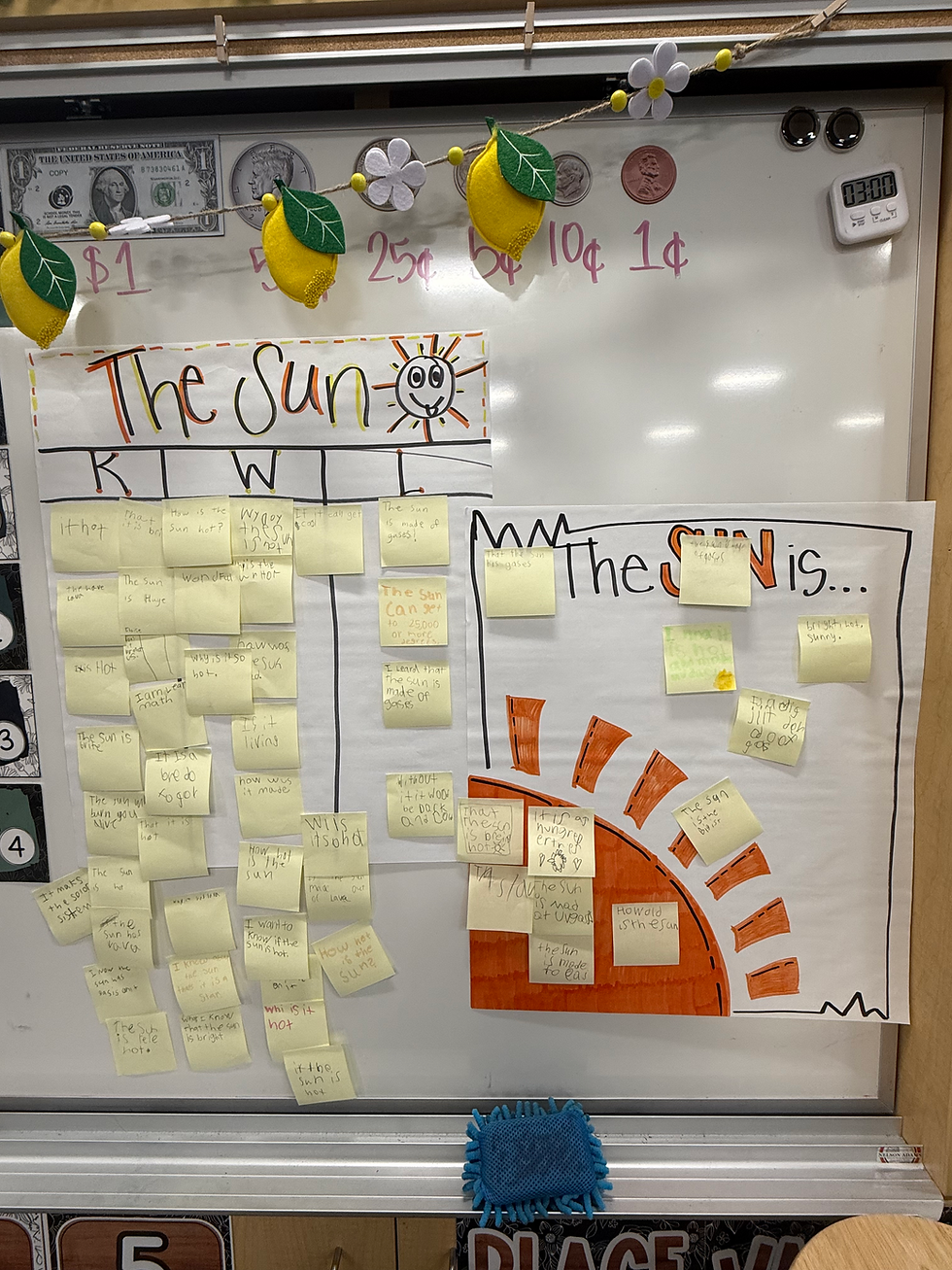
One strategy Pemelton uses to build background knowledge as a whole class is adopting a KWL Chart. A KWL chart is a graphic organizer that helps students activate prior knowledge and track and summarize new information before and after a lesson. Each column of the graphic organizer represents:
K (Know): Where students fill out everything they already know about a topic before the lesson.
W (Want to Know): Students write questions they have about the topic to engage further in the lesson.
L (Learned): After the lesson, students use this column to reflect on what they just learned about the topic.
Download a free KWL chart printable for your classroom (handout and poster versions)
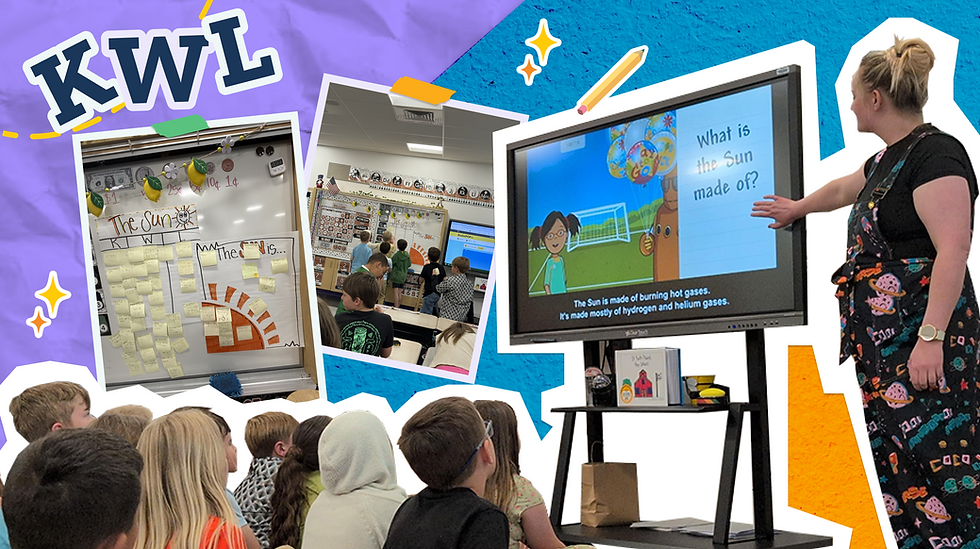
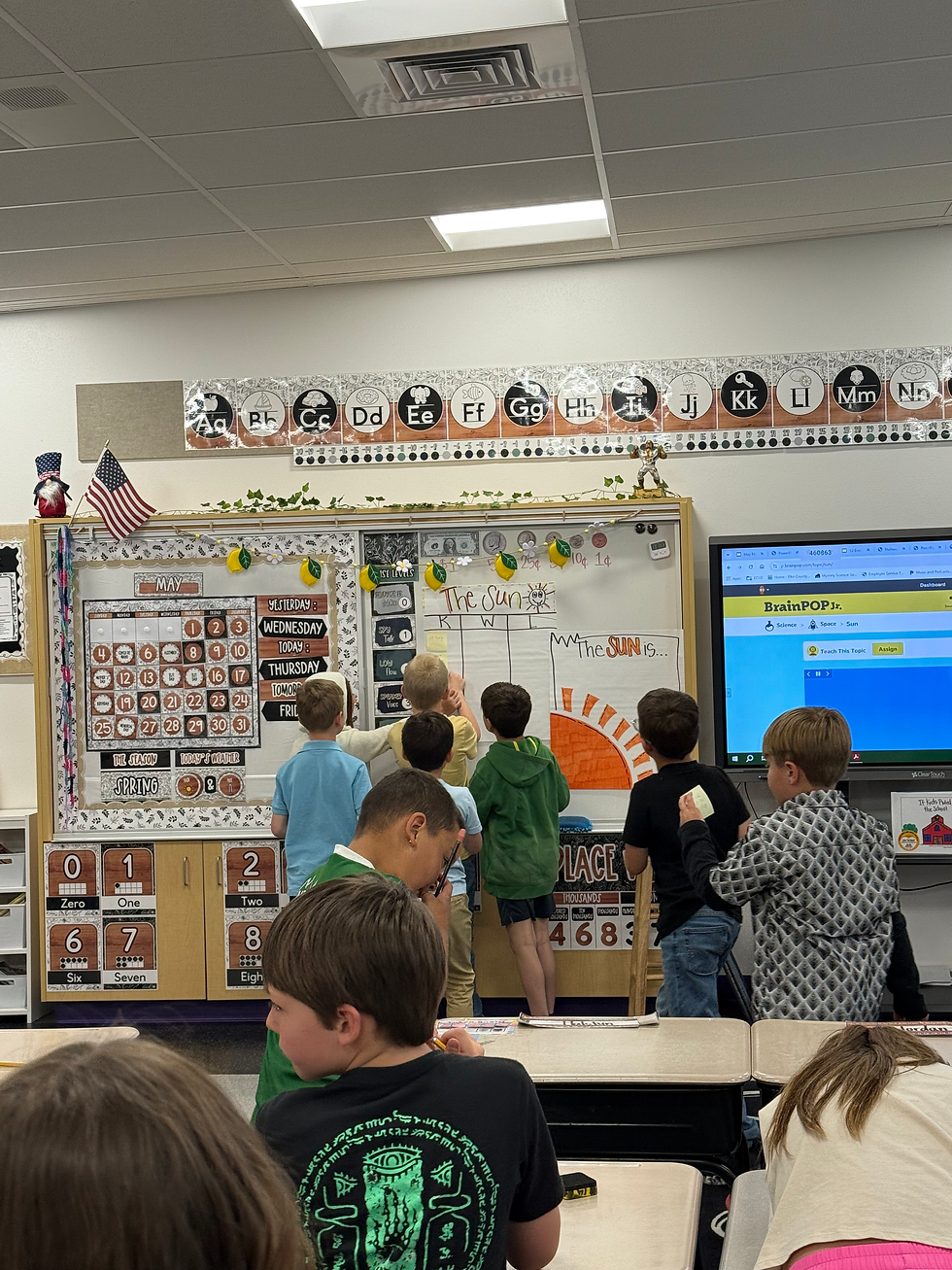
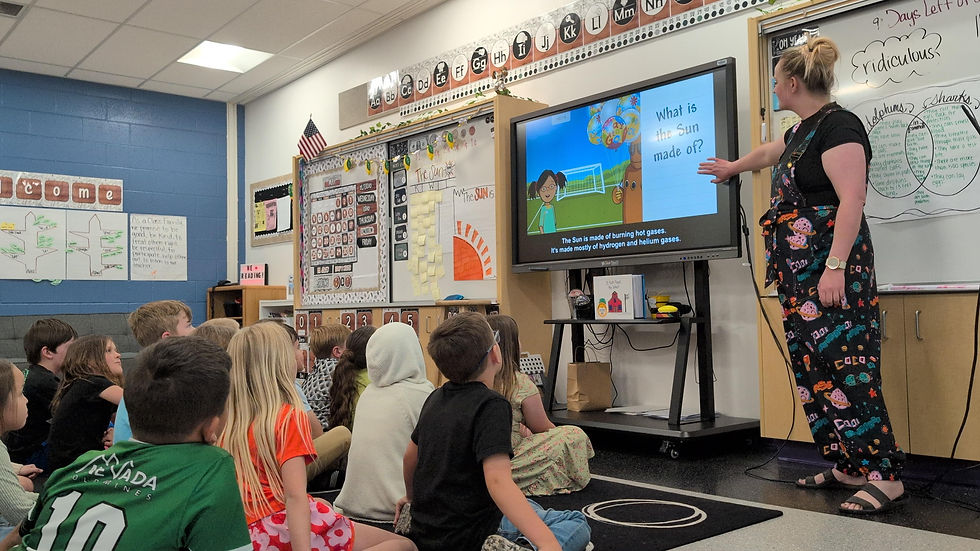
Before starting the Sun movie, Pemelton passed out sticky notes to her students to write down what they already know about the sun (K) and what they want to know about the sun (W), and had them place their responses on a collective KWL anchor chart at the front of the room.
During the movie, she would pause and prompt her students with questions (you can do this manually or with Pause Points turned on) to check for understanding and connect back to the students’ sticky notes.
“Typically they come to the rug and then I play the video with the whole class,” she says, “I like to do the quiz whole-class too, where they raise their hands and kind of vote on which one they want, and then we can discuss [further].”
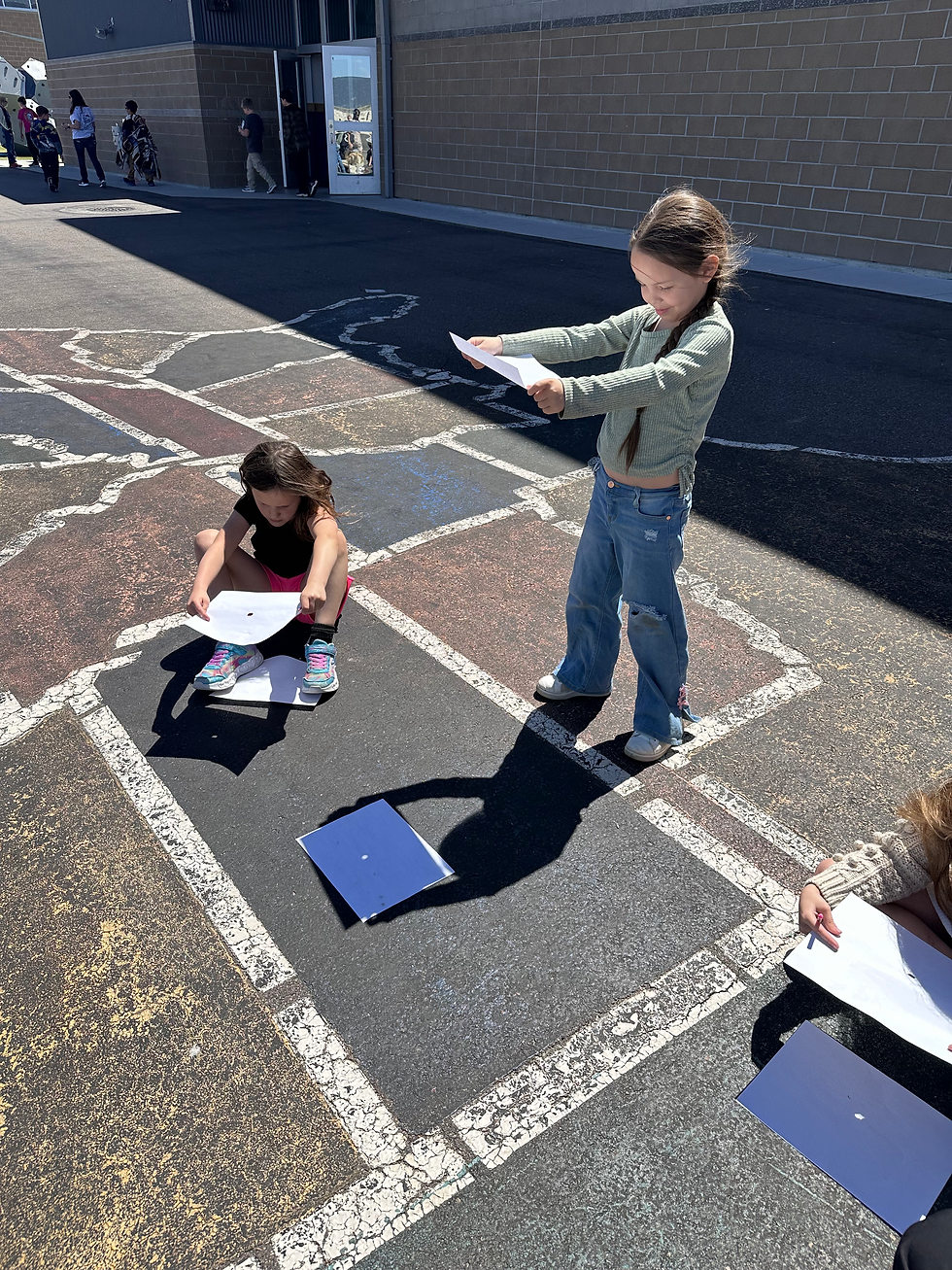
Next, the class moved the lesson outside. Inspired by Annie’s demonstration in the movie, students created pinhole viewers with two sheets of paper to observe the sun and share their discoveries together, including how to tell time with the sun’s shadow. Once inside, the students completed the KWL chart (the L column) by sharing one new fact they learned about the sun.
The hands-on activities made the Sun lesson memorable, but the real takeaway was the shared context students built together. Building background knowledge together as a whole class creates a foundation for collaboration and critical thinking.
Download this teacher-created lesson plan to build background knowledge on the Sun using BrainPOP Jr. (available for free, for a limited time)
Benefits of Building Background Knowledge as a Whole Class
“I think [the whole group] is my favorite part. Just when they're together at the rug and we're all collaborating, discussing, having really good conversations, and they're coming up with questions. I love getting them thinking about things together,” says Pemelton.
When background knowledge is built together as a whole class, you create active learning environments primed for deeper discussion and engagement. It helps students make meaningful connections, draw inferences and make predictions, and engage critically with the text or topic at hand. And when done collectively, it…
Creates shared context through common reference points (such as stories, vocabulary, examples) that teachers and peers can refer back to throughout a unit, supporting collaboration, discussion, and problem-solving.
It levels the playing field by ensuring that every student has access to the same key information needed for understanding and higher-order thinking.
Strengthens comprehension when students can make meaning and draw connections together.
Builds classroom community through collective discovery, excitement, and dialogue.
Turn Background Knowledge Into Hands-On Learning with BrainPOP Jr.
Samantha Pemelton’s classroom shows how powerful it can be for students to build background knowledge together to lay the foundation for curiosity, collaboration, and comprehension. By pairing BrainPOP Jr. with hands-on activities, you can transform abstract concepts into memorable learning experiences that stick!
Jordan Bremus-Wyles is the Sr. Manager, Content & Social Media Strategy at BrainPOP, with a Bachelor's in English and Journalism. She is a youth advocate and mom of two. Jordan's favorite BrainPOP character is Tim.


Comments