THE CHALLENGE
Same standards, different starting points
Strong lessons don’t just cover content—they move a whole class forward together. But momentum is hard to keep when students arrive with different levels of familiarity.
Background knowledge turns new material into teachable moments, so teachers can spend less time backtracking and more time deepening understanding.
WHY TEACHERS CHOOSE BRAINPOP
The bridge between your curriculum and your students’ comprehension
Engaging
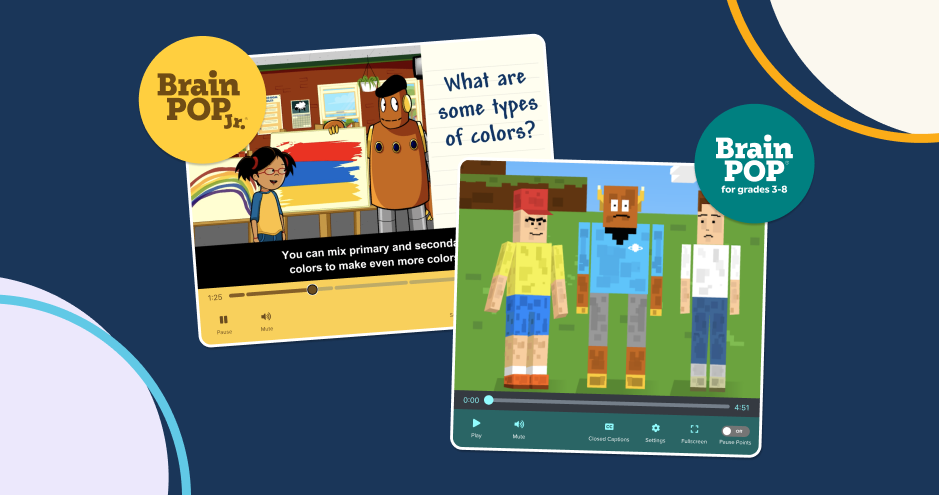
Students lean in when learning feels like a story. Relatable characters and real-world connections spark curiosity, make ideas stick, and fuel conversations that carry through each lesson.
Accessible
Every learner deserves a shared starting point. With BrainPOP, reading level isn’t a barrier, so students enter the lesson with the background knowledge and vocabulary to access your grade-level curriculum.
Flexible
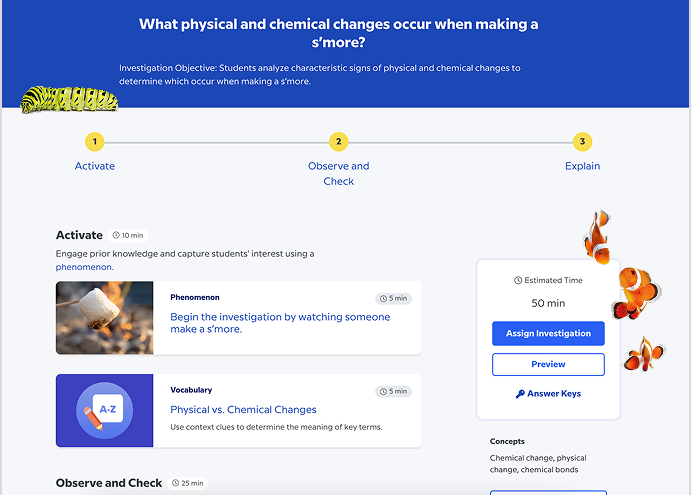
Whether introducing a new unit, reteaching tough concepts, or checking understanding, BrainPOP fits seamlessly into whole-class, small-group, and independent work—before, during, or after instruction.

Words and visuals improve comprehension
Students learn more when narration and visuals are paired, compared to text alone.
Characters support understanding
On-screen companions act as trusted guides, helping students follow and connect new ideas.

Humor keeps students’ attention
When humor is tied to content, it boosts attention and recall of academic material.
Accessible language unlocks meaning
Using age-appropriate vocabulary and examples helps students make sense of abstract ideas.
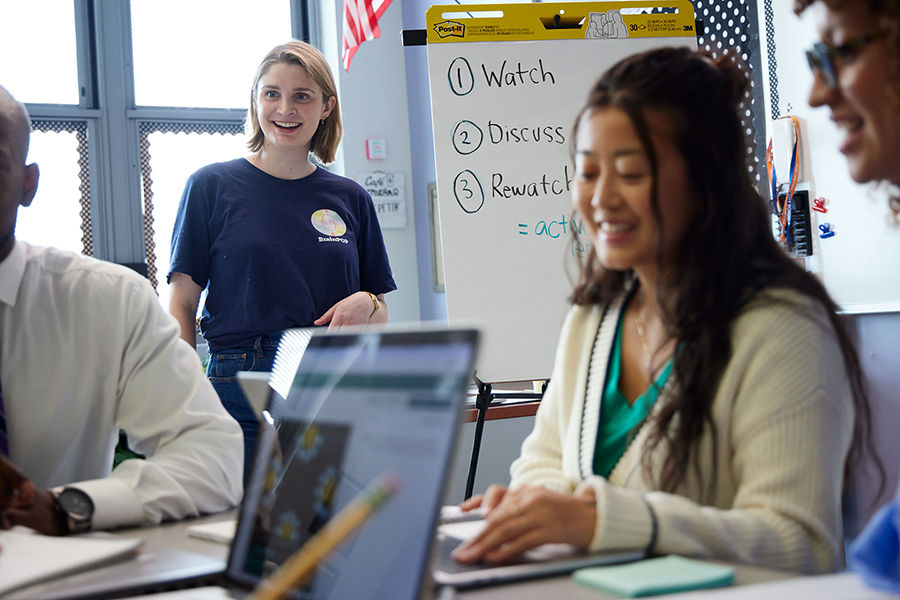
Backed by learning science, built on what works
Research shows students learn more when instruction builds on what they already know. When background knowledge is presented with relatable characters, visuals, and humor, students enter the lesson with more confidence to ask questions and make connections.
Join our mailing list to get the latest news, product updates, and content straight to your inbox.
Join our mailing list to get the latest news, product updates, and content straight to your inbox.
SEE THE DIFFERENCE
Turn heads down into hands up
Teachers already work hard to build background knowledge with pre-reading, KWL charts, and class discussions. The challenge is that not every student comes in with the same knowledge or reading skills.
With BrainPOP, everyone starts with the same shared context, no matter their reading level. That means less time catching students up, and more time making meaning together.
Before
American Revolution
Slideshows and textbook excerpts are used to introduce the causes of the Revolution. Some students connect, but others struggle to follow along because the reading level is tough.
Before
Photosynthesis
The process of photosynthesis is introduced with the chemical formula on the board and an assigned reading. Some students can follow, but others hesitate to participate, unsure what the terms mean.
Before
Acceleration
The formula for acceleration is introduced, leaving some students to memorize math without seeing what it means.
After
American Revolution
The class starts their lesson with BrainPOP’s American Revolution topic. With visuals and narration, every student — regardless of reading ability — enters the discussion knowing the key events. The teacher can then guide richer questions and analysis.

After
Photosynthesis
BrainPOP’s Photosynthesis topic visually shows students how sunlight, water, and carbon dioxide transform into energy. Everyone sees the process in action, so the discussion shifts to applying the concept in labs instead of decoding the text.
After
Acceleration
BrainPOP’s Acceleration topic shows cars, roller coasters, and real-life examples. This shared visual context means students can more easily connect the math to lived experience, providing a stronger grasp of the subject.
BrainPOP Blog
Frequently Asked Questions
Background knowledge is the general information students know about the world (e.g., facts, concepts, and cultural understandings), like knowing that the Earth orbits the sun, that water freezes into ice, or that elections are part of how governments work.
When students bring this broader foundation into the classroom, they can connect new material more easily. Research shows that background knowledge is a key factor in reading comprehension and overall academic success.Prior knowledge refers to specific learning or experiences a student already possesses, while background knowledge encompasses broader world knowledge that supports understanding across various subjects. Both play an important role in learning.
Prior knowledge helps teachers connect today’s lesson to past instruction. Background knowledge ensures students can understand and relate to new material, even if it’s outside their direct school experience.Teachers can build background knowledge by exposing students to new ideas, linking lessons to real-world examples, and pre-teaching key concepts. Examples may include:
-
Introducing new topics with short videos, visuals, or interactive media.
-
Pre-teaching vocabulary and concepts before reading or discussion.
-
Using stories, examples, and connections to current events or real-world contexts.
-
Encouraging conversation, questioning, and exploration of students’ own experiences.
-
Reading comprehension depends on both decoding skills and understanding of the subject matter. Students who already know about a topic can interpret new words, ideas, and references with greater ease. For example, a student familiar with the concept of ecosystems will find it easier to understand a passage about food chains.