Let Academic Language Be Your Classroom Participation Superpower

Updated: Oct 8, 2025

When students grasp academic language, it’s like giving them a key to unlock the classroom’s potential. It’s not just about passing tests; it’s about empowering them with the words they need to dive deep into discussions, build on ideas, and express their thoughts with clarity and confidence.
Students with the right vocabulary can participate actively and meaningfully, whether dissecting a book or sharing perspectives in a lively debate. And sure, while these skills definitely give them an edge outside of school, the real magic is in how it transforms their classroom experience, turning every lesson into an opportunity for deeper understanding and connection.
Activate Students' Communication Superpowers
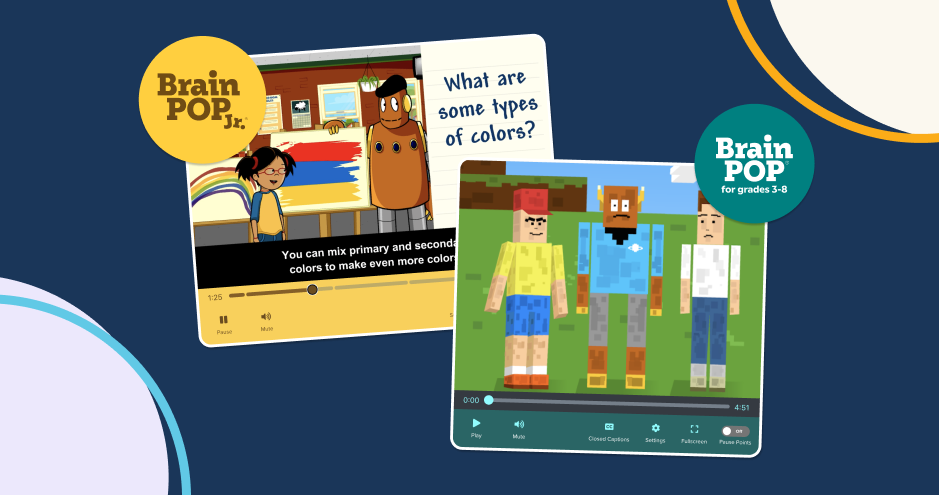
When students watch BrainPOP movies, they’re learning new vocabulary in context. This means they encounter new words as we do in real life—as part of the sentences and paragraphs they listen to in conversations. They can build background as they see the words come to life onscreen and, in some cases, cement their understanding as the movie automatically stops for Pause Points, giving them time to try out the term in discussion with their elbow partners.
Students also need time to process and practice each new word. Luckily, BrainPOP’s activities are here to help. Vocab Builder helps them practice the new academic words in conjunction with related high-frequency Tier 2 Vocabulary words. After the movie, students can explore “word cards” that ask them to use context clues and other higher order thinking skills to decipher the meaning of vocabulary related to the movie. Because they have the background knowledge from the movie, they can feel confident in interacting with these new words in context.
BrainPOP Connected Texts (coming soon!), meanwhile, shows these new words in the context of a related reading. These texts allow students to build on their new background knowledge at a level that works for them. Plus, built-in word and sentence level-help can scaffold understanding by giving age-appropriate definitions and sentence simplifications for every word in the passage.
Make-a-Movie is another BrainPOP activity that students can use to demonstrate an understanding of newly acquired vocabulary. When students make BrainPOP-style movies, they plan, organize, and craft scenes from their imagination. They can create animated visual representations of each word they learn and use our narration tool to practice using the word aloud in context.
The More Students Engage, the More They'll Learn
It takes a lot of practice to make a new word “sticky.” Researchers estimate that it requires anywhere from seven to twenty encounters with a word before it finds a home in your long-term memory.
The more meaningful the experience, the more likely your students will retain new words. That means the ways that many of us experienced vocabulary instruction in school—tactics like copying from the dictionary or repeating new words over and over—just won’t cut it.
To truly internalize new vocabulary, students need tools that allow them to practice authentically. BrainPOP’s many research-based learning activities allow them to leverage their new vocabulary to build meaning and express their thoughts.
Trust BrainPOP to Bring Academic Language to Life
BrainPOP empowers learners to express their ideas confidently, engage in academic discussions, and build success throughout their learning journey. Join our educator community to connect with other teachers and see how they use BrainPOP’s tools to drive student learning in their classrooms.
Katie Pothireddy is a product and content marketer and a former vice principal, teacher coach, and classroom teacher. She holds a Master’s in the Science of Education from Johns Hopkins University. Katie's favorite BrainPOP character is Becca.


Comments