Making Vocabulary Stick with Vocab Builder

Tier 2 vocabulary words pop up everywhere! These high-utility words, such as predict, require, or explain, appear across subjects and texts. They are more precise than everyday conversation words but not specific to one content area, allowing them to support academic success and lay the foundation for lifelong learning. That’s where Vocab Builder comes in. This interactive feature provides students with meaningful, engaging practice using high-utility words to strengthen comprehension and build confidence.
With flexible activities, real-time student data, and built-in literacy strategy support, BrainPOP 3-8’s Vocab Builder makes word learning stick while giving teachers the insights they need to differentiate instruction and build confident, capable readers.
What Is BrainPOP's Vocab Builder?
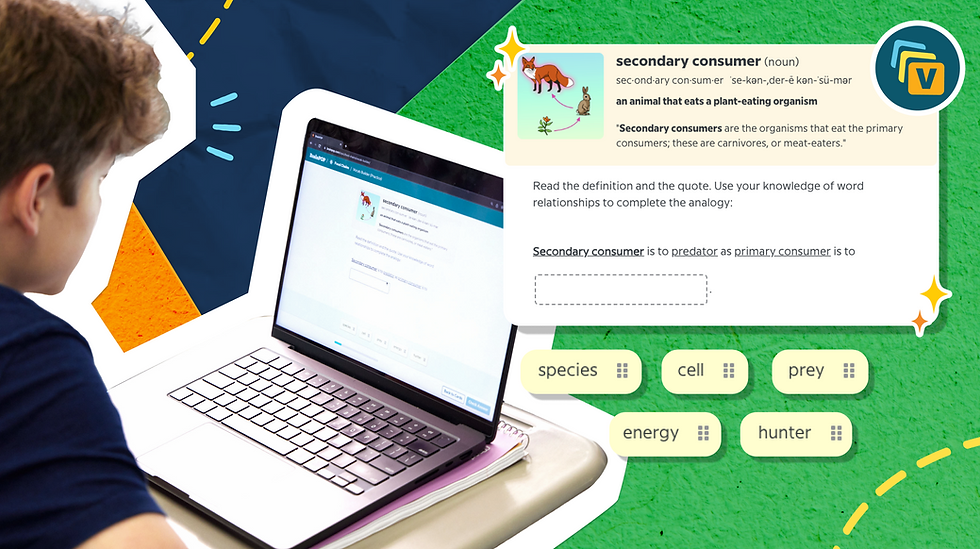
Vocab Builder introduces students to a curated bank of Tier 2 words that appear in the BrainPOP movie. Each word is presented on an interactive flashcard with definitions, pronunciation, and visuals to support understanding. The words are grade-leveled and aligned to state standards, which helps ensure they’re accessible while still offering opportunities to stretch their vocabulary skills.
Once students are familiar with the words, they engage with Vocab Builder’s multimodal activities, like drag-and-drop, Venn diagrams, synonym and antonym sorting, and sentence writing. Each activity type provides meaningful practice using important vocabulary strategies such as interpreting context clues and analyzing word parts.
Why Vocabulary in Context Matters
By connecting vocabulary to the BrainPOP movie topic, Vocab Builder helps students make sense of new words through meaningful context rather than in isolation. They use background knowledge to uncover meaning, identify clues, and apply vocabulary strategies. This kind of contextual learning is essential for comprehension and long-term retention.
Vocab Builder also supports literacy skills emphasized in state standards, including using context clues, analyzing word parts, and interpreting academic language across subjects.
How to Use Vocab Builder Across Subjects and Learning Routines
Every learner benefits from vocabulary instruction, but not every student needs the same kind of support. Vocab Builder can be used in different ways to meet your students’ needs.
Use it:
Before or after a movie to introduce or reinforce Tier 2 words
As independent practice for students who need targeted support
In stations or centers to offer differentiated skill-building
As a print resource, with worksheets that extend vocabulary practice offline
Whether you’re teaching the whole class or personalizing instruction, Vocab Builder gives you flexible options that fit into your day.
This kind of flexible approach aligns with the principles of Universal Design for Learning (UDL), which encourages offering multiple pathways for students to access, engage with, and demonstrate understanding of content.
Real-Time, Auto-Graded Data to Guide Vocabulary Instruction
One of the most powerful features of Vocab Builder is its auto-graded data.Teachers get real-time insight into their students’ progress and performance as they complete activities.This data helps teachers:
Spot trends in student understanding
Identify which vocabulary strategies need reteaching
Group students for small-group instruction or intervention
Celebrate growth and build word confidence
No extra grading is required. Just meaningful data to inform your next move.
Build Long-Term Word Knowledge and Reading Confidence
Strong vocabulary knowledge supports success across reading, writing, and academic content areas. With Vocab Builder, students get consistent, engaging exposure to words that matter and build strategies they can apply when encountering new vocabulary.
Explore how this interactive feature helps students in grades 3–8 build vocabulary, strengthen literacy skills, and gain confidence with words across the curriculum.
Visit BrainPOP 3-8 to learn more!
Jackie Glassman is a curriculum designer, editor, and content strategist who builds meaningful learning experiences that meet K–8 students where they are. She blends rigor, empathy, and creativity to develop standards-aligned, culturally responsive curriculum rooted in how students truly learn. Jackie is also a dedicated yogi and her favorite BrainPOP character is Moby.


Comments