Windows and Mirrors in the Classroom: Teaching AANHPI History and a Fuller Story of America

Every child deserves to see themselves in the stories they learn.
In education, we often talk about the importance of giving students both “windows and mirrors”—a way for lessons to open up new perspectives while also reflecting students’ own identities. Windows invite students into worlds beyond their own. Mirrors affirm that who they are and where they come from belong in the classroom. Sometimes, lessons can even become sliding glass doors, an invitation to step inside, explore, and feel a sense of belonging.
The ‘windows and mirrors’ framework was introduced by educator Emily Style in 1988 and further developed by Dr. Rudine Sims Bishop in her 1990 essay, Mirrors, Windows, and Sliding Glass Doors, where she argued that all learners need reading experiences that allow them to see themselves reflected, explore perspectives different from their own, and step into the lived experiences of others—helping prepare them to thrive in a diverse world.
What "Windows and Mirrors" Means in the Classroom
As teachers, we are encouraged to ask: Who is the main character in this story? Whose voices and perspectives might be missing? The first question is usually straightforward. History books often make it clear who the central figures are. The second is harder. How do we identify gaps in our understanding if we have not encountered them before?
I know that feeling well. Growing up Taiwanese American in a mostly white neighborhood on Long Island, I rarely saw my family’s story or anything close to it reflected in school. My classmates asked why my eyes looked different, laughed at my seaweed snacks, and turned my language into a crude joke. But on Friday nights at Chinese school, everything shifted. My name was not funny, my food was not strange, and I could dance in a way that felt rooted in belonging. Then Monday would come, and those mirrors would disappear.
That absence shaped me as a student. Later, as a teacher, I began to notice how it was shaping my students, too.
In my third year of teaching elementary school, I read aloud the story of Ruby Bridges and realized I had never learned about her in my own schooling. By my eighth year of teaching, I was introduced to Sylvia Mendez and her family’s fight to desegregate schools in California. My students were immediately captivated, but I was struck by how new this history felt, even to me as an educator.
When I joined Make Us Visible New York as Co-Director—the New York chapter of a national nonprofit that has passed bipartisan legislation to bring Asian American histories into K-12 classrooms across the country—I began discovering even more stories and figures, like Mamie Tape and her fight for access to education, that revealed a much fuller picture of our shared past. They showed that Asian American, Native Hawaiian, and Pacific Islander (AANHPI) histories are not sidenotes. They are part of the foundation of our country.
And that is the bigger lesson.
When these stories are missing, it is not just one community that loses out. It is all of us. A more thorough understanding of history helps students feel more connected to one another, more grounded in their communities, and better prepared to contribute to the world around them.
This isn’t about adding something extra to the curriculum. It is about making sure our children inherit a more complete story of America, one that reflects our shared histories and recognizes the many individuals and communities who helped build this country.
Now, as both a middle school teacher and a mom of two, I carry that responsibility with me every day. I want my students and my children to grow up understanding that history has always been shaped by many voices, each adding to the strength and complexity of our nation.
Free AANHPI History Resources for Teachers
The good news is that educators do not have to start from scratch. There are more tools than ever to support this work in practical, sustainable ways.
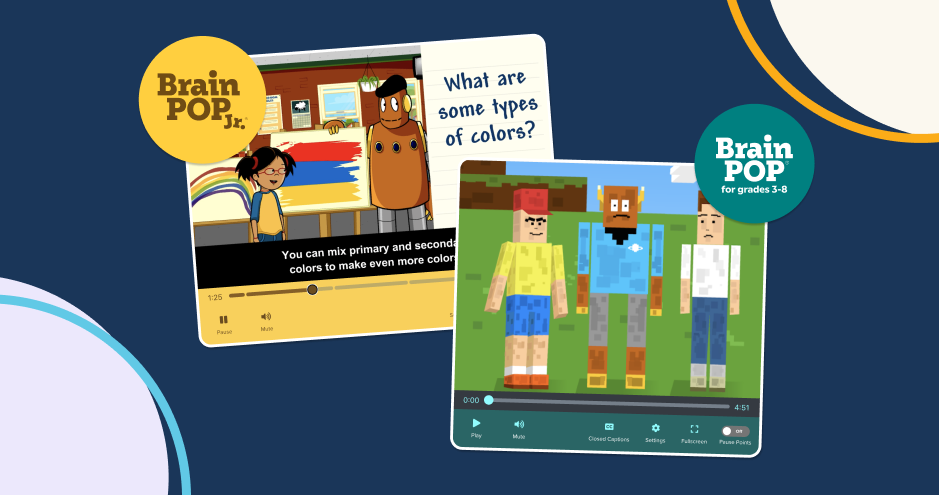
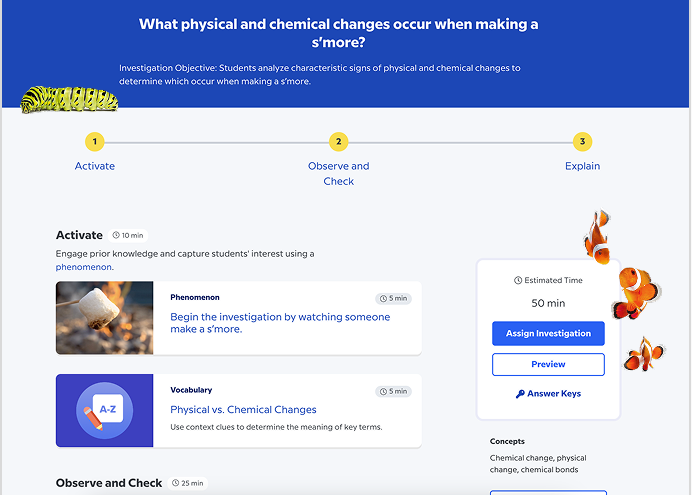
At Make Us Visible, we develop free resources, including coloring pages, K-12 book lists, and discussion guides, that highlight AANHPI histories and experiences. Through partnerships like Make Us Visible x BrainPOP, these stories are brought to the classroom through engaging videos and interactive lessons, featuring figures such as Queen Liliʻuokalani and Eugenie Clark.
BrainPOP also offers videos on historical events and figures, such as Japanese American Incarceration, as well as innovations like the Transcontinental Railroad, which pair well with Make Us Visible’s coloring pages to draw students into these chapters of history. Our resources help students see who they are, who came before them, and how their stories connect to the larger American story.
Most importantly, these resources are designed to fit into what teachers are already doing. A short BrainPOP video can build background knowledge before a lesson. A coloring page can spark a five-minute conversation. A read-aloud can anchor a morning meeting. Small shifts like these can open up space for more students to see themselves and one another more clearly.
Why Representation in Education Matters for All Students
We may not be able to teach every story in a single school year, but we can commit to asking better questions in our lesson planning and in our classrooms: Whose voices have we not heard yet? What perspectives are still missing?
When students begin asking those questions, classrooms become a place of genuine curiosity and connection. Students start to see themselves not just as learners of history, but as part of it. As individuals whose voices matter and whose stories will shape what comes next.
And that is what makes this work so hopeful. With every lesson, every conversation, and every new story we bring into the classroom, we are helping students carry forward a more complete story of America—one where every child can see themselves in it.
Christine Dai is a Co-Director of Make Us Visible NY and teaches 6th grade in the New York City Public Schools, with a Masters degree from Teachers College at Columbia University. She loves bubble tea and is a mom of two. Christine’s favorite BrainPop characters are Annie (because she loves seeing a character who looks like her as a kid) and Moby (because he’s hilarious!).


Comments