5 Questions Every District Leader Should Be Asking About AI Literacy

Updated: Jul 30
This article was written by our partners at Digital Promise.

AI has quickly made its way into education, showing up unevenly across classrooms, homes, and friend groups. Some students use chatbots and tutors with adult supervision, while others experiment on their own with little guidance about how to use AI safely, responsibly, or effectively.
Many districts have responded by creating AI policies that regulate which platforms are approved and what safeguards should be in place. This is necessary, but only a starting point for developing an intentional AI literacy plan that can support students’ learning and healthy growth as AI increasingly becomes part of their daily lives.
Instead of leading with the question, “What are students allowed to do with AI?” districts need to ask: “How will we help students cultivate the skills and knowledge they need to navigate a world shaped by AI?” Digital Promise’s AI Literacy Framework offers a helpful guide for district leaders. AI literacy is the knowledge and skills needed to understand, evaluate, and use AI, including the capacity to decide if, when, and how to use it.
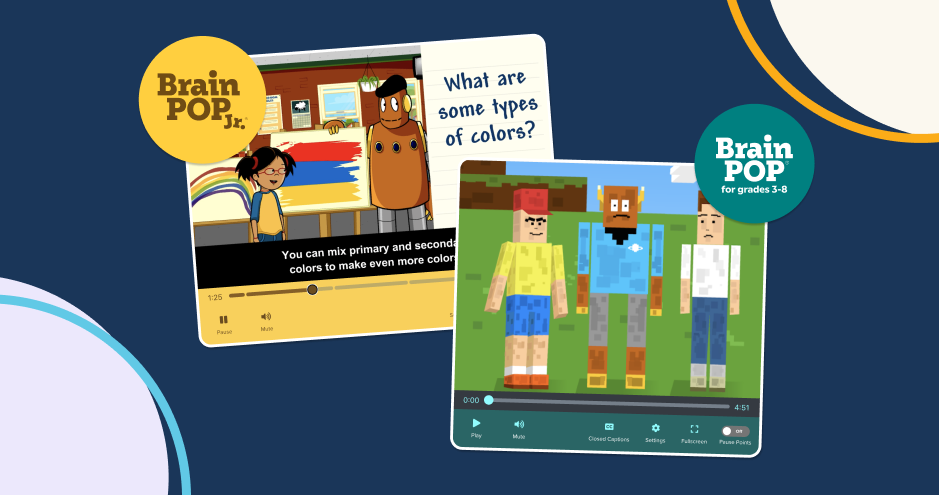
In partnership with Digital Promise, BrainPOP’s new AI Literacy Collection helps bring AI knowledge and skills into classrooms and homes through age-appropriate movies, discussion guides, and family resources that answer common questions students ask about AI. BrainPOP and Digital Promise are equipping districts to move from broad AI conversations to practical, classroom-ready AI literacy implementation.
Don't have BrainPOP yet and want to learn more?
The following five questions can serve as a readiness check to help districts identify where they already have shared expectations, supports, and safeguards in place, and where they still need a clearer plan.
How will we prepare educators to teach AI literacy, not just use AI platforms?
Districts cannot foster students’ AI literacy without supporting the educators who will teach it. Educators need AI literacy themselves to guide students’ AI use, respond to their questions, and help them recognize the possibilities and limitations of AI.
According to a recent national survey, over half of teachers report using AI at least once a week to help plan lessons and create learning materials, and nearly a quarter use AI weekly during actual classroom activities. However, only 18% of teachers report receiving formal guidance on how to use AI. Further, teachers who receive training on how to use AI in their own work are not necessarily prepared to teach students AI literacy.
One-off professional development sessions on AI are common, but real instructional change requires sustained support for professional learning. Ongoing coaching can be effective, especially when districts empower teacher leaders who can model effective practice and assist colleagues.
The goal is not for every teacher to become an AI expert, but for educators across subjects to feel prepared to help students think critically about the AI platforms they use and the outputs they receive. Students need structured opportunities to ask and answer questions, such as "Where did this answer come from?" "How could this output be incomplete, misleading, or biased?” and “Who benefits from this AI system, and who might be harmed or left out?”
When educators have sustained support for developing their own AI skills and their AI literacy pedagogy, they are better positioned to make AI literacy part of everyday teaching and learning.
What should every student know and be able to do with AI?
A district plan for AI literacy needs to be grounded in expectations for student learning. This extends beyond how students learn with AI to encompass how they learn about AI. Initiatives like Portrait of a Graduate can help districts align their instructional goals with the AI skills and knowledge they believe are most important. In an AI world, skills like critical thinking and empathetic communication become increasingly important.
Districts also need to define what AI-literate students should understand and be able to do by the time they leave elementary, middle, and high school. In earlier grades, this might mean recognizing that AI is designed by people and does not “know” or “feel” in the same way humans do. In later grades, it might include topics such as training data, misinformation, privacy, bias, and human oversight, which students could apply by developing their own AI tool.
A shared vision for students’ AI literacy can provide a guiding star for educators and families to promote coherent and developmentally appropriate learning experiences.
Are our students using AI to deepen their learning?
One of the biggest risks of AI in education is that students can use it to complete tasks without learning. Students have always found shortcuts, but AI makes it easier to produce polished work while bypassing the thought processes the task was meant to practice. As a result, traditional approaches to academic integrity are no longer enough. Districts need to focus less on whether AI was used and more on how and when it was used, emphasizing process over product.
This means redesigning assessments and activities so that student thinking remains visible. Districts should ask not only what students should learn, but also how they will know students are learning it. Evidence of learning can come from tests as well as classroom discussions, performance tasks, and group projects that make students’ reasoning and judgment clear to teachers.
Both students and teachers need to understand that AI does not magically improve outcomes, but it can support learning when paired with strong pedagogy and intentional instructional design. AI can deepen learning when teachers scaffold learning experiences and use formative assessments that allow students to show their thinking while using AI.
Where should AI literacy be in our curriculum?
Some districts may elaborate a scope and sequence for AI literacy, but an easier start is to identify natural entry points in existing instruction: “Where are students already encountering ideas related to AI?” AI literacy will not be effective if it becomes “one more thing” added to overburdened teachers and schedules.
Students learn AI literacy best when it is grounded in the educational experiences that they already receive. For example, when students use AI in an ELA class, a teacher might briefly discuss human authorship, AI-generated voice, and training data. Similarly, students might study misinformation in social studies or data systems in science.
Integrating AI literacy into the existing curriculum can provide all students with opportunities to gain valuable skills and knowledge, not just students in electives, advanced courses, or in classrooms of teachers who are early AI adopters. As districts map these opportunities, they should also consider whether all students have meaningful access to AI literacy learning across grades, subjects, and school communities.
Taken together, identifying effective entry points for AI literacy can become the basis for pragmatic and equitable progressions.
How are we building trust with families and communities around AI?
Conversations about AI do not end when the school day ends. Some caregivers may worry that AI will reduce students’ ability to think for themselves. Others may wonder whether their child will fall behind if they do not learn to use AI. Still others may have concerns about data privacy, screen time, or the impact of AI on children's relationships.
Districts should not assume families already understand what schools are teaching about AI or why. Building trust requires transparent communication about what students will learn about AI, how technology may be used in classrooms and at home, and what safeguards are in place to protect students.
A strong family communication strategy might include caregiver discussion guides, community forums, plain-language explanations of district policy, and examples of what AI literacy lessons look like. BrainPOP’s AI Literacy Collection includes conversation starters that districts can share to help families talk with children about AI in age-appropriate ways.
When families are included, they are better positioned to support students as curious, responsible, and empowered users of emerging AI technology.
Moving from AI policy to AI literacy planning
Answering these five questions will not solve all the AI challenges a district faces, but it can help leaders understand where they are starting from.
Do educators have the support they need? Is there a clear vision for what students should know and be able to do? Are students using AI in ways that deepen learning? Is AI literacy integrated into the curriculum? Do families understand and trust the district’s approach?
For many districts, the honest answer will be: “not yet.” That’s okay. Developing an effective and sustainable AI literacy plan depends on having an accurate understanding of the district’s present AI landscape.
To continue this conversation, watch (or revisit) our webinar, "What does AI literacy actually look like in classrooms?" where we will discuss what AI literacy implementation can look like in practice. BrainPOP and Digital Promise have partnered to help districts translate a research-based AI literacy framework into practical classroom and family resources that support students’ ability to understand, evaluate, and responsibly use AI.
Additional thanks to Digital Promise contributors Dr. Judi Fusco, Megan Pattenhouse, Dr. Kelly Mills, Dr. Quinn Burke, Dr. Jeffrey Starr, Martika Parkinson, and Nancy Chou.

Dr. Chris Wegemer is Senior Researcher of Emerging Technologies & AI Literacy at Digital Promise, instructional faculty at UCLA, and a former high school STEM teacher. He studies how AI use among adolescents shapes their civic development, socioemotional well-being, and agency. He works closely with schools and districts to advance evidence-driven AI literacy practices and policies that support students’ purposeful learning and flourishing.


Comments