Curiosity in Action: How Instructional Scaffolds Improve Reading Comprehension

Updated: Oct 1
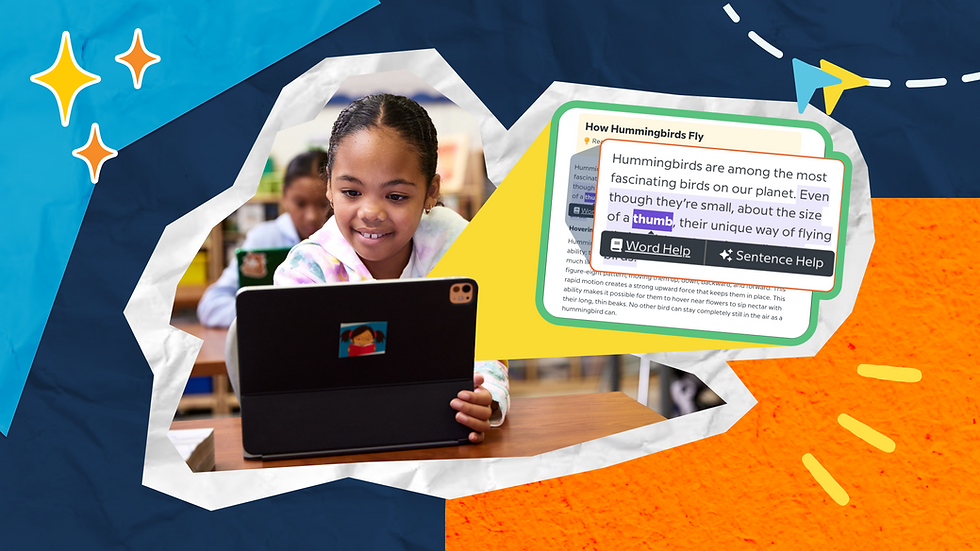
At BrainPOP, we believe every student is a natural-born explorer. Whether they are diving into the tiny world of states of matter or navigating the complexities of map skills, that spark of curiosity is what drives real learning. But sometimes, even the most curious explorers hit a roadblock—a tricky sentence or a word they’ve never seen before.
That’s where BrainPOP’s embedded AI reading scaffolds* come in. We recently teamed up with third-party researchers at Instructure to see how these tools are helping students of different grades and reading levels. The results are in—and they indicate that when students use the instructional scaffolds, on average, they better understand texts. When students of a variety of reading levels use scaffolds at their own discretion, they tend to achieve higher scores on reading comprehension activities across key subjects like science, social studies, and English Language Arts.
The Power of Choice
One of the most important things about BrainPOP’s instructional scaffolds—like Word Help and Sentence Help—is that they are completely optional. In Connected Texts, a student is in the driver’s seat.
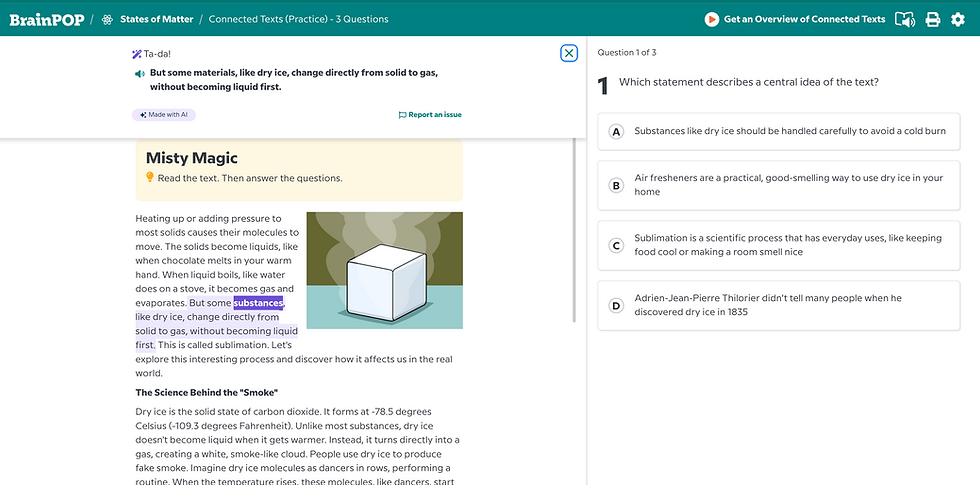
BrainPOP instructional scaffolds provide on-demand assistance with instant vocabulary definitions and simplified sentence rewrites—helping students of all reading levels navigate reading passages. These built-in supports allow learners to access and understand grade-level content, ultimately boosting their comprehension and performance on reading comprehension learning activities.
When a learner chooses to click on a scaffold, it isn't just a click; it’s an act of student agency. It shows they’ve recognized a gap in their knowledge and—instead of giving up—they’ve decided to fill it. That is curiosity in its purest form!
Building Bridges to Background Knowledge
The study, which looked at over 59,000 students in grades 3-8, found something truly promising. When students used these instructional supports, it helped them unlock the background knowledge they needed to succeed in their activities.
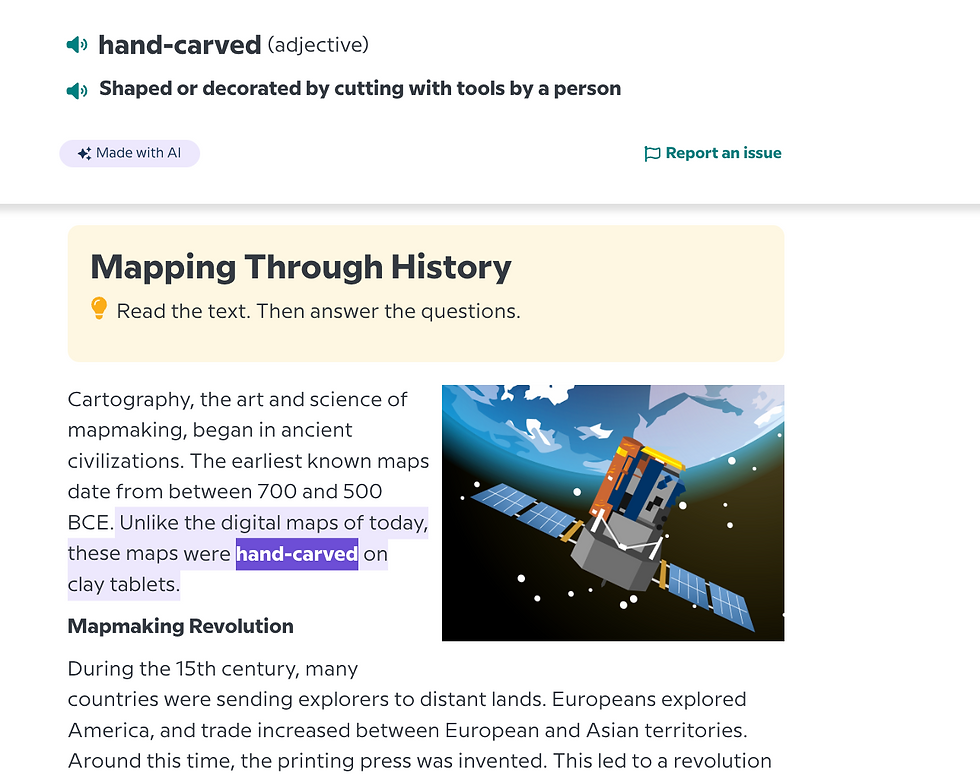
Here’s a quick look at how these scaffolds supported learners across different subjects:
Science: In topics like Forces and States of Matter, students who used scaffolds often saw a positive boost in their learning activity scores.
Social Studies: Map Skills saw some of the strongest results, with students in every grade band showing a positive connection between scaffold use and their scores.
English Language Arts: For tricky topics like Main Idea, scaffolds provided that extra bit of "Sentence Help" that made a world of difference for many middle-grade learners.
Meet Learners Where They Are
We know that every classroom has a mix of different reading levels and backgrounds. BrainPOP’s instructional scaffolds act as a temporary bridge, helping students access grade-level content without feeling overwhelmed.
Whether it's a 3rd grader learning about gravity or an 8th grader mastering figurative language, these tools ensure that a difficult word doesn't stand in the way of a "lightbulb moment."
Classroom Strategies To Turn Curiosity into Comprehension
To help you translate the research findings into classroom success, here are three practical tips for using BrainPOP movies and Connected Texts together. This "Better Together" approach is designed to foster student agency and turn that natural curiosity into deeper comprehension.
The "Pause and Pivot" Strategy
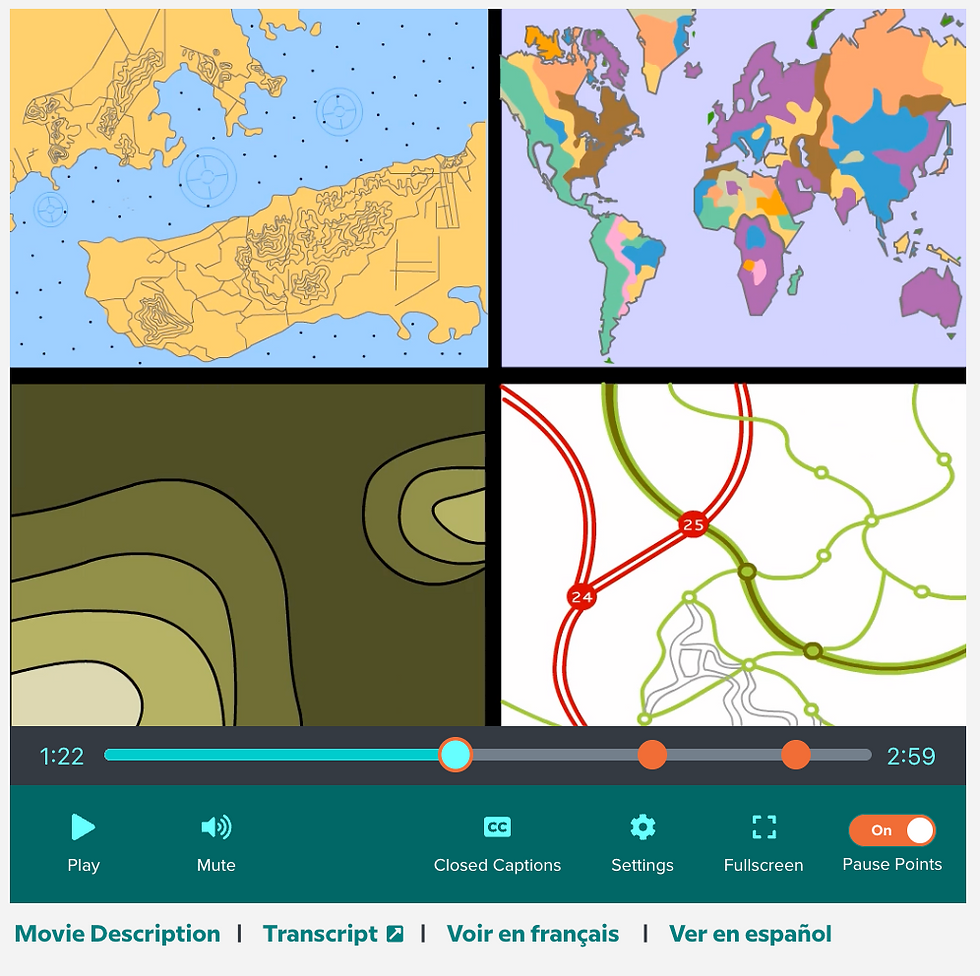
Before diving into a Connected Text, start with the BrainPOP movie to build a shared foundation of knowledge.
The tip: Watch the movie as a whole class or in small groups. At a key moment (like when Tim explains a complex term), pause the movie and tell students, "We’re going to find out more about this specific idea in our reading today."
Why it works: This creates a "need to know" moment. By the time students open the Connected Text, they are already curious about the details, making them more likely to use scaffolds to bridge any gaps in the text.
Model the "Curiosity Click"
Students sometimes view "help" buttons as a sign that they aren't "good" at reading. Use the findings of this study to change that narrative.
The tip: Project a Connected Text on the board and do a "Think Aloud." When you come across a difficult sentence, say, "I understand these words, but the sentence is a bit long. I’m curious if the 'Sentence Help' tool can make this clearer for me."
Why it works: By modeling the use of Word Help and Sentence Help as tools for the curious rather than "crutches" for the struggling, you empower students to exercise their agency. You’re showing them that acknowledging a knowledge gap is the first step toward mastery.
Connect the "Map" to the "Meaning"
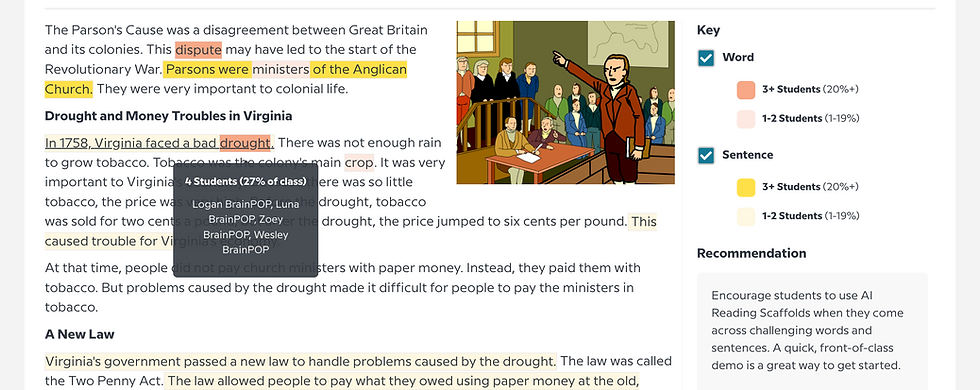
Use the BrainPOP Reading Heatmap (available in the teacher dashboard) to see where your students are clicking most.
The tip: Check your Heatmap after a lesson on a topic like Main Idea. If you notice a high volume of scaffold use on a specific paragraph, bring that paragraph back to the whole group for a quick "mini-lesson."
Why it works: The scaffolds provide immediate support for the student, while the data provides "just-in-time" insights for you. It allows you to support student agency while still providing the high-touch instruction that moves the needle on learning scores.
By integrating movies and texts in this way, you aren't just teaching a topic—you’re teaching students how to navigate the world with curiosity and confidence.
What's Next?
This study (which met ESSA Level III standards for promising evidence!) is just the beginning. We are committed to continuing our research to find even more ways to support your students as they grow into confident, independent "meaning-makers".
So, the next time you see a student clicking for a hint or a simplified sentence, celebrate it! They aren't just getting help; they are practicing the most important skill of all: taking charge of their own learning and learning to be curious.
*Connected Texts include optional AI reading scaffolds that provide students with simplified sentences and definitions for any word or sentence. All AI functionality in BrainPOP products are configurable and can be turned off to meet local needs and policies
Dr. Michelle Newstadt is a STEM educator and product strategist with over a decade of experience in edtech and science and engineering education. She is currently the Director of Product Strategy at BrainPOP. She leads the impact and efficacy work as well as AI content generation and evaluation for BrainPOP products. She led the BrainPOP Science team, a new product launched in 2021 for middle school science that incorporates science and engineering content practices, and cross cutting concepts.
Previously, she led research, innovation, and education efforts at organizations such as Gooru and Expii, working to support all learners to develop complex STEM knowledge. Additionally, Dr. Newstadt worked as an adjunct science education professor at the University of Pittsburgh, where she taught pre-service secondary science teachers. She was also a middle and high school science and math teacher in NYC. Her favorite BrainPOP character is Tim.


Comments