CALIFORNIA
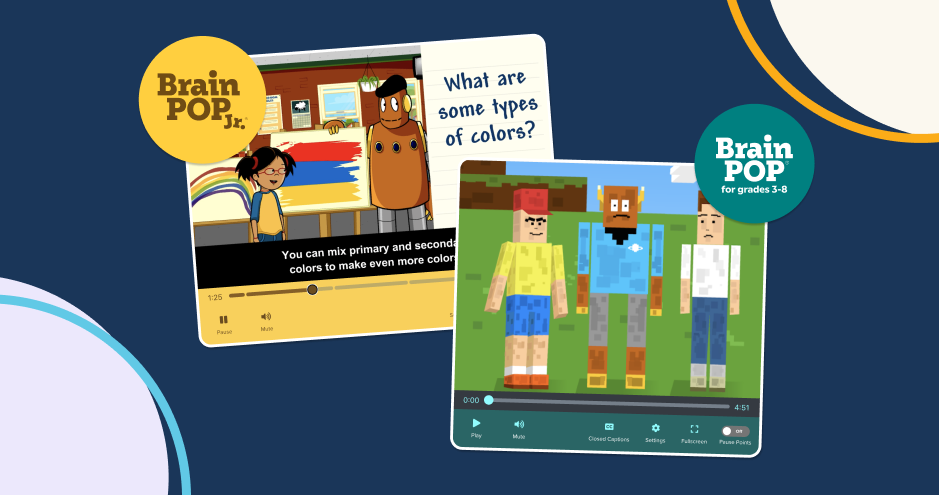
Every lesson has a eureka moment. BrainPOP helps every student find it.
Every California student is working toward the same Common Core and NGSS standards, but not every student starts with the same background knowledge. BrainPOP closes that gap through story, so every student connects to what they're learning.

Nuggets of California knowledge
Covering California's story means moving from the state's first Indigenous nations, through the Spanish missions and Mexican rancho era, to the Gold Rush that reshaped everything after 1848.
BrainPOP turns each chapter into a story every student can follow and remember.
What California educators are saying
“BrainPOP is great for introducing or reviewing a topic just before an assessment. It's also excellent for teaching research methods and reviewing English concepts that [students] are required to communicate in the science realm.”
Gail Bushey
Middle School Teacher
Alpine County Unified School District
"I really like how [BrainPOP] always starts with a letter—'Dear Tim and Moby, I'm curious about...' It instills that lifelong curiosity, that wondering how the world works. Sometimes it leaves them with a question instead of a clear answer, which is good for critical thinking — and ultimately, for lifelong learning."
Jessika Mercado
5th Grade Teacher
Arcadia Unified School District
California requires AI literacy. BrainPOP teaches kids how to think about it.
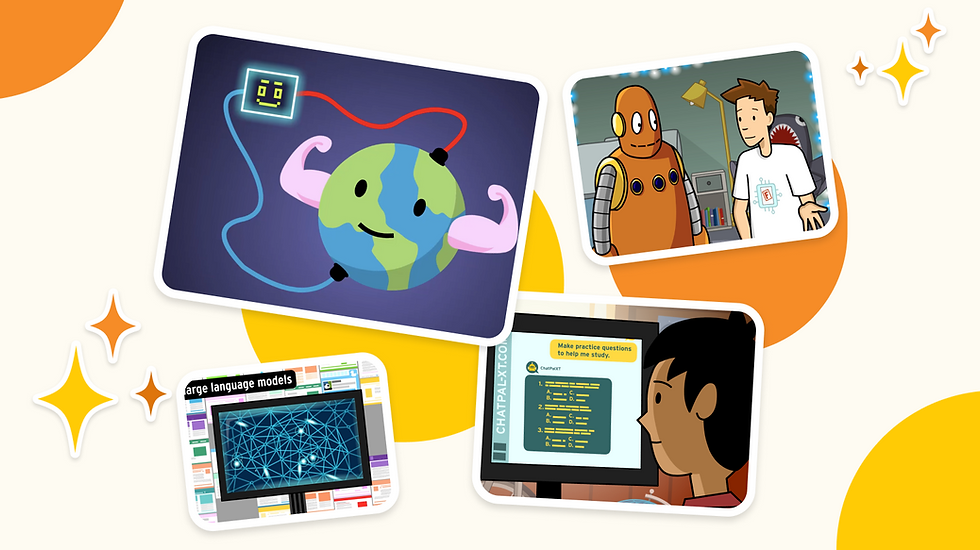
California now requires AI literacy in every subject, starting in elementary school. BrainPOP's AI Literacy Collection, developed with Digital Promise, brings that into the classroom.
10 animated AI movies show students how to trust AI, who owns what it makes, and what it actually knows—whether it's in science class, in ELA, or in the group chat.
Each movie lives inside a topic you already teach, so AI literacy shows up right where students' questions are—not in a separate unit to squeeze in.

Every standard, every grade, all of California
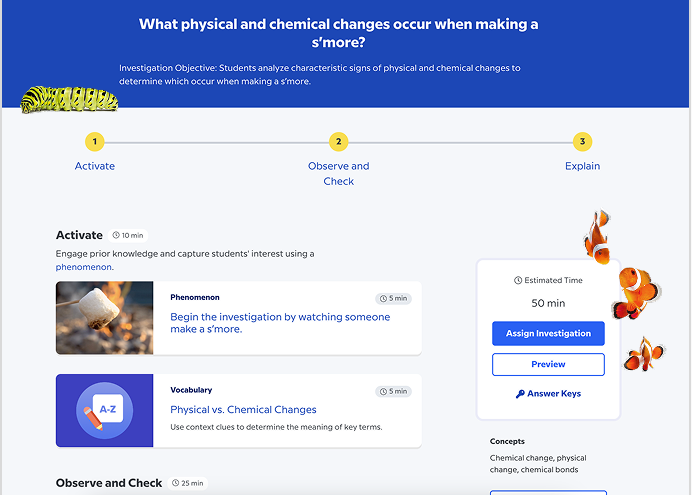
BrainPOP topics are mapped directly to California's Common Core State Standards (CA CCSS), Next Generation Science Standards (CA NGSS), and the History–Social Science Framework. Find your grade and subject, and plan your next lesson with total confidence.





Your district, your call
From the Central Valley to the coast, no two California districts follow the same roadmap. Our Content Management Tool lets school and district admin decide exactly which topics are available at the campus or district level—so BrainPOP fits your community, your policies, and your state.
...and, action! Bring BrainPOP to your classroom
How does BrainPOP support California's Common Core and NGSS standards in the classroom?
Each one of BrainPOP's 1,300+ topics is aligned to California's Common Core State Standards (ELA and Math), Next Generation Science Standards (CA NGSS), and the History–Social Science Standards—giving curriculum teams one resource that maps cleanly across every core subject, not just one. Search by standard, subject, and grade to see exactly where BrainPOP fits your scope and sequence.
How does BrainPOP support California’s diverse learner population?
California has the largest population of English learners in the country, and BrainPOP was built with them in mind: audio narration and adjustable reading levels, built-in accommodations for students with IEPs, and BrainPOP ELL for dedicated English language development (ELD), grades K-8.
How does BrainPOP help California students engage with state and local history?
Topics like the California Missions, the Gold Rush, and the state's Indigenous nations align directly to California's History–Social Science Standards, giving teachers movies and activities that drop straight into an existing unit—no extra planning required.
How does BrainPOP support California’s AB 2876 AI literacy requirements?
AB 2876 requires AI literacy to be integrated into California's math, science, ELA, and history–social science curriculum frameworks—one of the first statewide AI literacy mandates in the country. BrainPOP's AI Literacy Collection, developed with Digital Promise, already delivers on that requirement today with ten animated AI spotlight movies on chatbots, bias, data privacy, and more.
How does BrainPOP support district content policies in California?
Because BrainPOP builds background knowledge across ELA, math, science, and social studies—while supporting English learners and students with IEPs—many California districts can tie BrainPOP directly to LCAP priorities around achievement, engagement, and support for high-need student groups, giving administrators documented justification for an LCFF-funded purchase.
How does a California school or district purchase BrainPOP?
BrainPOP accepts purchase orders for school and district subscriptions. All subscriptions are annual, and multi-year agreements are available. Contact our team for a quote, purchase order processing, or multi-year pricing.
Does BrainPOP have options for Title I schools in California?
Yes—BrainPOP can be funded through several California funding streams:
LCFF (Local Control Funding Formula): the most common path. Districts use supplemental and concentration funds, often justified through their LCAP.
Title I: may qualify, especially in high-poverty districts like LAUSD, Fresno Unified, and Oakland Unified.
Title IV-A (Student Support and Academic Enrichment): may qualify, including under the "well-rounded education" priority, which covers AI literacy.
Perkins V: can support CTE goals when a district's pathways call for it.
ELOP (Expanded Learning Opportunities Program): some districts use this for afterschool use.