Make Your Mark: BrainPOP Celebrates International Dot Day

Updated: Sep 18
Sometimes, something small is all it takes to spark something bigger.
In Peter H. Reynolds’ beloved book The Dot, a student named Vashti is convinced she can’t draw. Her teacher encourages her to start small: Make a mark and see where it takes you. Vashti starts with a single dot. That single mark becomes the beginning of something much larger: discovery, creativity, and the confidence to keep going.
That same kind of spark can happen in any classroom.
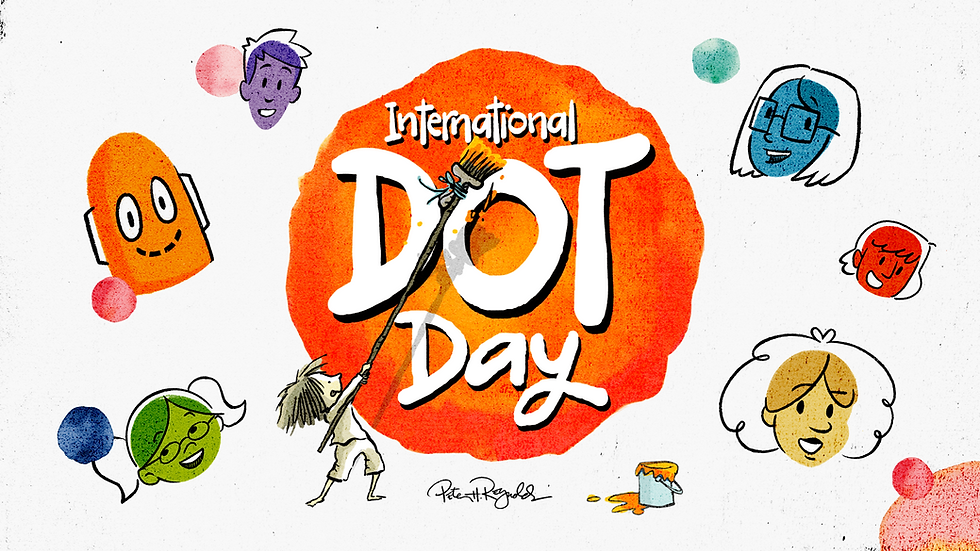
BrainPOP is teaming up with International Dot Day, a global celebration of creativity, courage, and collaboration inspired by The Dot. Each September 15-ish, students and educators worldwide make their mark and discover where their ideas can lead.
That belief in following curiosity wherever it leads closely reflects what BrainPOP believes about learning.
Table of Contents
Curiosity Starts Something
A question. An unexpected connection. A moment of curiosity that makes a student think, Wait, why does that happen?
Curiosity is where learning begins.
BrainPOP movies are designed to spark those moments of discovery, helping students connect new ideas to what they already know, to the world around them, and to one another. Those connections can build the confidence to ask another question, explore another idea, or try something they weren’t sure they could do.
It’s a progression that shapes how BrainPOP supports learning: sparking curiosity, creating classroom connections, and building confidence.
And it echoes the journey at the heart of The Dot. Vashti begins with a single mark. Her teacher notices it, values it, and encourages her to keep exploring. That small start helps her see herself differently and keep creating.
Imagine what can happen when classrooms make space for that same sense of possibility. Reynolds has seen firsthand how a teacher’s encouragement can shape a student’s confidence, creativity, and path forward.
Interview with Peter H. Reynolds
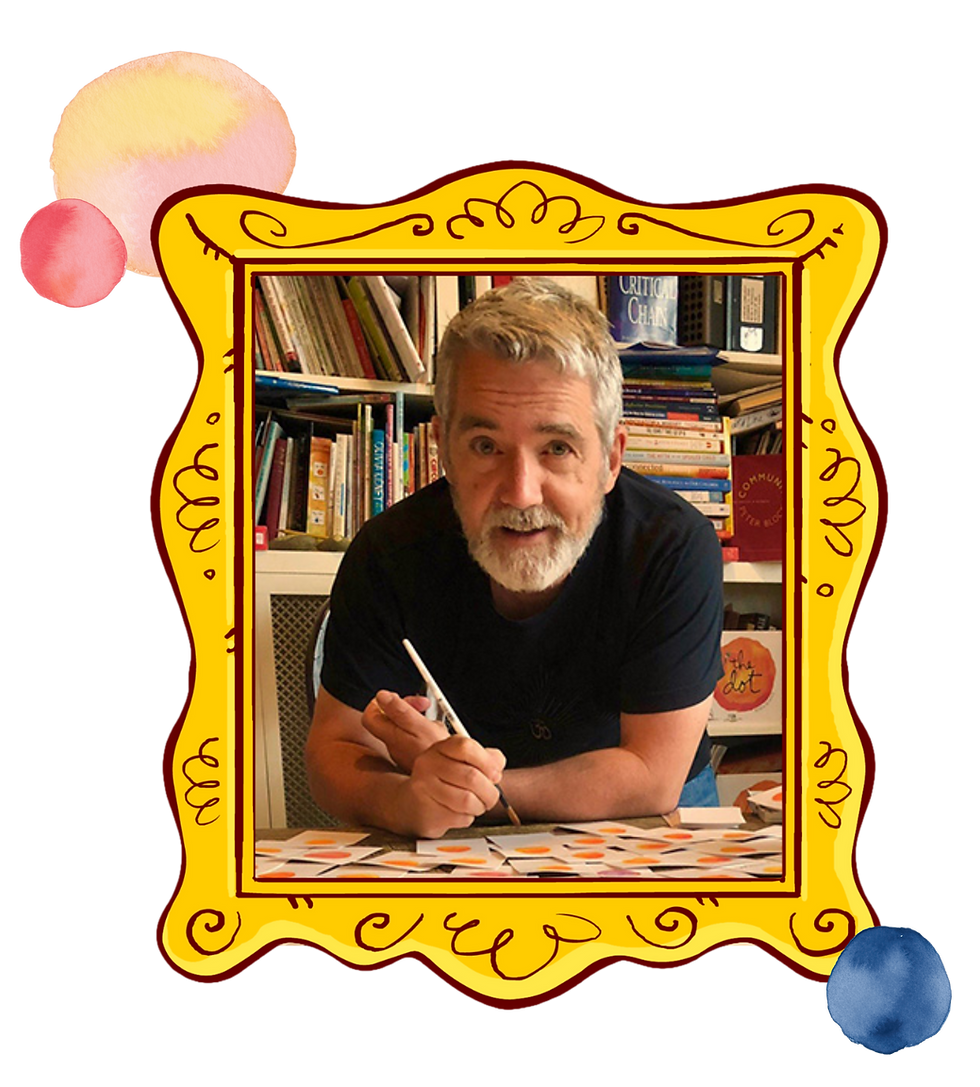
We talked with Peter H. Reynolds about what inspired The Dot, the role curiosity plays in creativity, and how teachers can help students make their mark.
1. What were you like as a student?
My twin brother, Paul, was a very good student. I, on the other hand, was a bit more distracted—especially when I had a drawing pencil in my hand with something nearby to write on (paper, book covers, desk!). At least, my teachers thought I was distracted. I was really paying attention in my own way. Drawing helped me process what I was hearing and kept me plugged in.
I was fortunate that a few teachers eventually recognized that my doodling was not something to stop. It was part of who I was and how I chose to engage the world with my curiosity and imagination.
2. Was there a teacher who had a significant influence on you? If so, can you tell us about them?
Mr. Matson was my seventh-grade math teacher in Chelmsford, Massachusetts. He noticed that I was always drawing in class. Instead of telling me to put my pencil away, he asked, “Could you use your art to teach a math concept?”
I created a comic strip, which he pointed out looked like a storyboard. Then he asked if I wanted to turn it into an animated film. Neither of us knew how to make one! But we figured it out together. So, at age 12, I made my first animated film to teach,
That experience helped me connect the dots between art, storytelling, technology, and teaching. Those creative connections eventually led me to launch my own company, FableVision Studios, which creates media, animation, and storytelling to teach. All because a teacher connected the dots of teaching and learning in creative, meaningful ways.
3. If you could tell your teacher, Mr. Matson, one thing, what would it be?
Thank you for noticing me. You looked beyond what I was supposed to be doing and saw what I was meant to be doing. You took something other people viewed as a distraction and helped me recognize it as a gift. That one 6-minute conversation literally changed the direction and trajectory of my life.
4. What was the actual moment The Dot was born from? Was there a real teacher, a real kid, or a real dot?
There really was a dot! One night in 2001, I was drawing in my journal before bed. I fell asleep with the tip of my marker resting on the page. Hours passed. The ink slowly soaked into the paper and created a large black dot.
When I saw it the next morning, I thought, “That is a pretty impressive dot.” I wrote The Dot above it and “by Peter H. Reynolds” below it. Then I propped the journal on the mantel.
Over the next few weeks, I kept looking at that dot. Slowly, the story of a frustrated young artist and the teacher who believed in her began to come into focus. An accidental mark became the beginning of a story—which is a reminder that the mistake you thought you made today may turn into the most creative thing you’ll ever do.
5. Vashti becomes very curious as she goes through her journey of creating dots. What role does curiosity play in the creative process? How does it “connect the dots”?
Curiosity is fuel for a creative journey. “I wonder what would happen if I do this?” “If I experiment with this new way of doing things, what will I create?” “What if I explored that less-traveled road?”
Once Vashti makes that first dot, she begins to wonder: Could I make a better dot? A bigger one? A smaller one? What if I change the color? Could I create a dot without painting a dot?
Curiosity gives us permission to play, experiment, and follow an idea without knowing exactly where it will lead. One question leads to another. There is no wrong answer—it simply provides more information or leads to deeper thinking and more questions. Before long, we begin connecting dots that we could never have seen when we started.
6. Your character's shift starts because someone else believed in her before she believed in herself. What is it about that kind of validation that unlocks confidence?
Great teachers often believe in us long before we believe it ourselves. In The Dot story, Vashti is a bit of a tough customer, which could have triggered a cranky response from her teacher. But Vashti’s teacher doesn’t chastise her. She finds a creative, surprising way through the tension. She treats Vashti’s small mark as something worthy. She asks her to sign it. Then she frames it and hangs it above her desk.
That tells Vashti, “I see you. Your idea matters. You might be capable of more than you realize.” When a trusted adult truly sees a child, it can change how that child sees themself. “If you believe I have a spark, maybe it’s true.”
7. Vashti doesn’t just gain confidence for herself; she gives that same encouragement to another student. Why did the story need to end with what she passed on?
I wanted readers to see that a creative learning journey isn’t all about you. Certainly, your own self-discovery and self-design are important, but it’s also important to pay it forward when you can.
At the beginning of the story, Vashti is stuck—and clearly in need of someone to believe in her. By the end, she has become that person for another child. In that moment, she becomes the teacher.
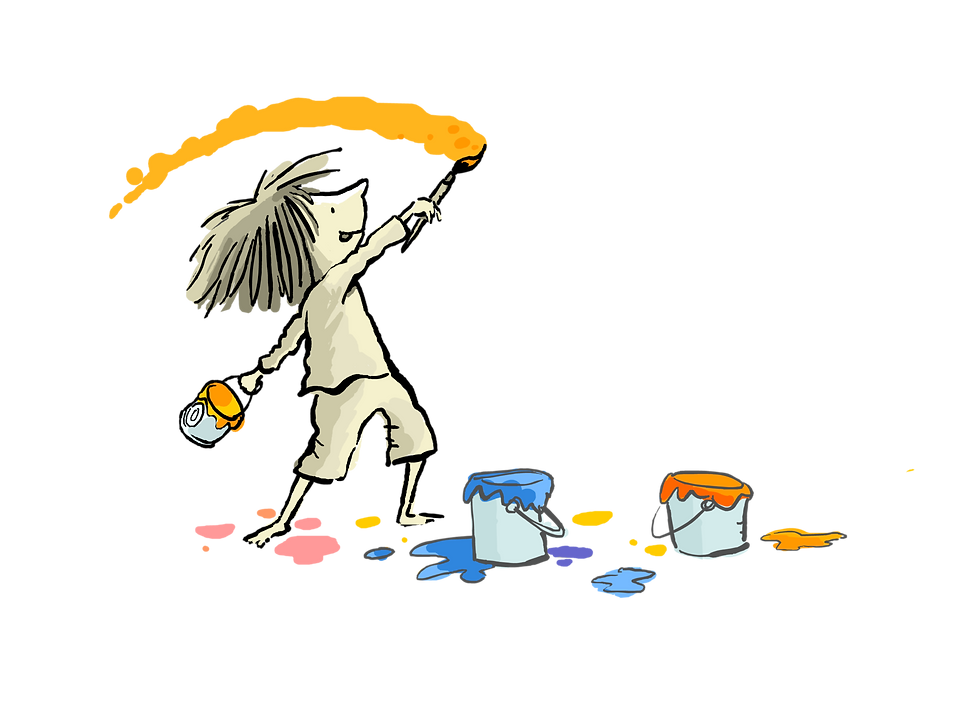
Encouragement creates a ripple of caring, compassion, and change. One person helps another find courage and confidence, and that person has the capacity to pass it on. And so on. Imagine what the world would be like if we intentionally cultivated those creative ripples.
8. You say your goal is “to inspire others to make a mark.” Tell us more about this. How can others, especially teachers, do the same? How did this start?
Making your mark doesn’t necessarily mean becoming famous or doing something head-turning. It means using your own gifts—whatever they might be—to contribute something positive to the world.
For me, that idea began with teachers like Mr. Matson, who noticed my spark before I fully understood it myself. Years later, I was able to weave that experience into The Dot.
I know countless creative educators who make this happen every day. They notice. They listen. They innovate spaces for different kinds of learners, temperaments, and dispositions. They help young people see that their ideas and voices have value.
9. If you could design one classroom ritual that every teacher adopted—something that nurtures creative risk-taking—what would it be?
I would create a weekly “Make Your Mark” moment. Give every student five or ten minutes to try something new. Draw, write, invent, build, wonder, or solve a problem in an unusual way. Let the work be unfinished. Let it be imperfect. Then invite students to sign it and share something they discovered.
The goal isn’t to make something “good.” The goal would be to begin, explore, and become a little braver each time.
10. What advice would you give to a kid who says, “I’m just not creative?”
I think I hear that from grown-up kids more than I do little ones! As we grow up, we seem to fall prey to the mythology that some people are creative and others never got chosen. But we’re all born creative—we just have to work it and develop it. And that absolutely won’t happen if you give up on yourself. I tell kids of all ages, “Keep going, never stop, keep going, never stop, keep going….”
11. What is a Dot Day moment from a classroom that has stuck with you?
The most impactful Dot Day was the very first one. When Terry Shay, a teacher in the middle of the cornfields in Iowa, first shared The Dot with his students on September 15, 2009. He invited them to create their own dots, sign them, and talk about how they’d make their mark on the world.
There was one dot, one teacher, one classroom celebration. But, of course, other teachers heard about it and joined in. The ripples began—concentric dots sweeping across the land—and those ripple-dots kept traveling around the globe until it became International Dot Day and is celebrated by millions of teachers, librarians, and students.
12. More than 20 years after The Dot, what feels different about its message today—for kids and for the adults raising and teaching them?
Today there is even more pressure to be perfect. Kids see an endless stream of polished pictures, finished products, and other people’s successes. Not to mention AI producing glossy results in seconds. It is easy for kids (and adults) to compare themselves and decide their own human effort is not good enough.
But, as the world is changing so quickly, we have to cherish our deeply human qualities: imagination, empathy, creativity, courage, and real connections between us all.
That makes the message of The Dot feel more urgent than ever: to encourage humans not to give up on their creativity just because an AI algorithm can outpace you. It’s time to double down on the care and cultivation of our own wonderful, quirky, often imperfect creative output.
Dot Day reminds us to just “make a mark—and see where it takes you.” Begin before you feel ready. Experiment. Make mistakes. Use the tools around you, but do not lose your own human, perfectly perfect-ish voice.
The world does not need more perfect people. It needs more brave, creative, and caring people who are willing to make their mark—and help others make theirs.
Keep Curiosity Going All Year Long
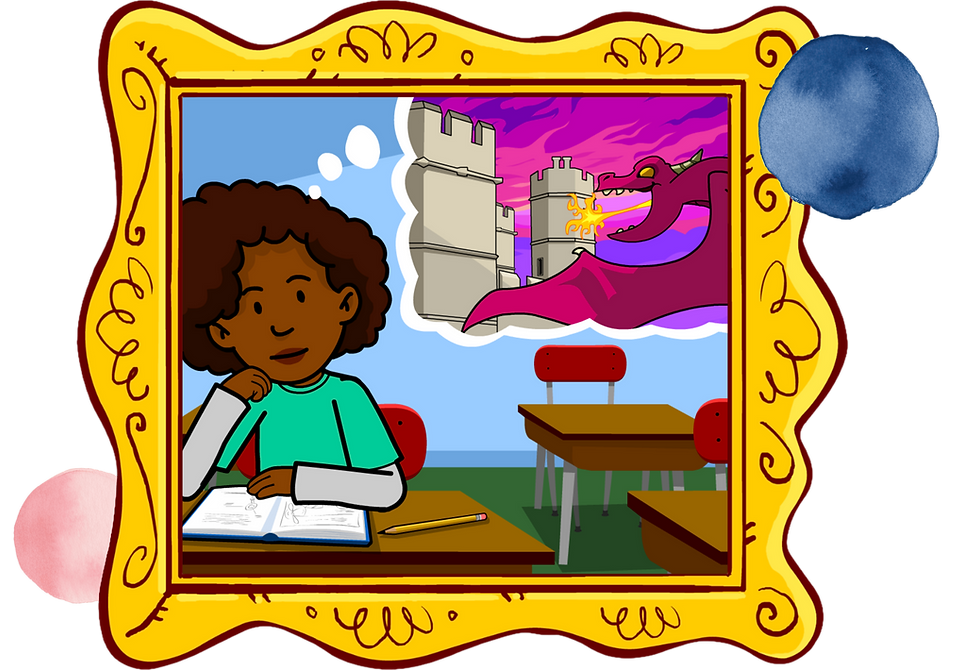
Dot Day happens each September, but curiosity doesn’t belong to a single day or subject.
A single dot might become a work of art, the beginning of a story, a point on a number line, or the start of a scientific question. That’s part of the fun: you never quite know where one small idea will take you.
Follow the dots with these BrainPOP and BrainPOP Jr. topics, each offering a different way to spark curiosity, make connections, and keep exploring:
BrainPOP Jr. and BrainPOP 3-8 topics:
BrainPOP (for grades 3-8+)
BrainPOP Jr. (grades K-3)
You can also explore official International Dot Day resources and an exclusive BrainPOP x Dot Day coloring sheet for more ways to bring Dot Day into your classroom.
Celebrate International Dot Day With BrainPOP
This year, Peter H. Reynolds joined BrainPOP for a special virtual International Dot Day event that you can watch (or rewatch) on-demand! Students will have a chance to draw Moby with a BrainPOP animator, while celebrating the curiosity and creativity that can turn one small idea into something much bigger. Plus, you might just meet a surprise guest. Watch now:
Because no one knows where a single dot, a single question, or a single moment of encouragement might lead.
Here’s to making your mark—and seeing where it takes you.
Dots designed by BrainPOP animators Lee E., Kristen C., and Alisa H.
Jackie Glassman is a content strategist who builds meaningful learning experiences that meet K–8 students where they are. She was part of the early team that helped shape BrainPOP Science when it was still just a kernel of an idea. Jackie blends rigor, empathy, and creativity to develop standards-aligned, culturally responsive curriculum rooted in how students truly learn. She is also a dedicated yogi, and her favorite character will always be Moby.


Comments