How the BrainPOP Animation Team Brings Learning to Life

By the time a BrainPOP script is done, it’s been through a lot. Learning designers have mapped what kids at every grade level need to understand. Scriptwriters and the editorial team have read scholarship, tracked down historians and archivists, wrestled the topic down to its one big idea, and figured out where the jokes go.
The next stop on a BrainPOP movie’s journey? The BrainPOP animation team, who bring it all to life and ensure that every frame—and every pause—is built to maximize student learning.
We sat down and had a conversation with Demian Johnson, VP, Design Director of BrainPOP, Caroline Petroff, Animator of BrainPOP, and Mike Watanabe, creator of Moby and voice of Tim—with guest appearances by editors Tamara Fisch and Sandy Fernandez—to walk through how the BrainPOP animation team and voice actors take a finished script and turn it into a finished movie.
From Script to Storyboard: Where Educational Animation Begins
The Research Phase
What happens when the editorial team is done writing a script?
Demian: The main goal of an animator is to determine how to bring a script to life visually and through animation. That starts with research—in order to present something visually, you have to really understand what it looks like and how it works.
Tamara: Yes, [the animators] do amazing academic research too. Stuff that we saw in our research that didn't make it into the script, sometimes shows up in their visuals! They’ll say, "Hey, I found this awesome detail. Mind if I add it?"
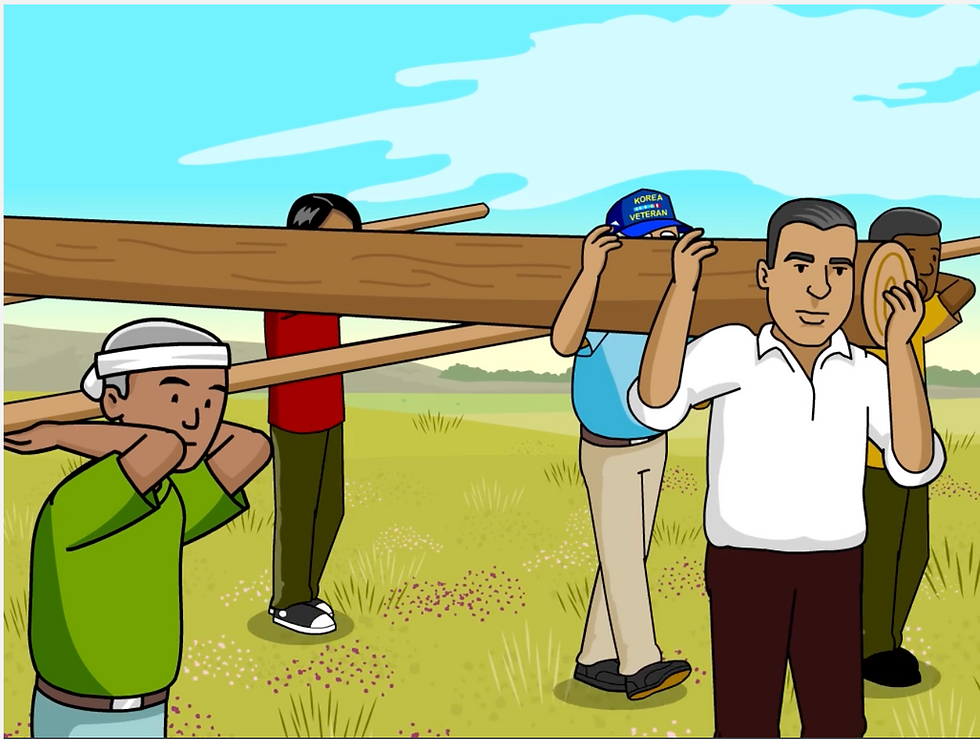
Sandy: One example is in Native American Traditions: it was showing a modern-day Lakota ceremony setup, and one of the guys had his Korean War veteran hat on.
There is a huge tradition of military service in Native communities; it's so present and so important. It was not in the script! [The BrainPOP animator] just stitched it in because of her own reading.
The Storyboarding Process: Simplifying the Complex
That's amazing. What comes after the research?
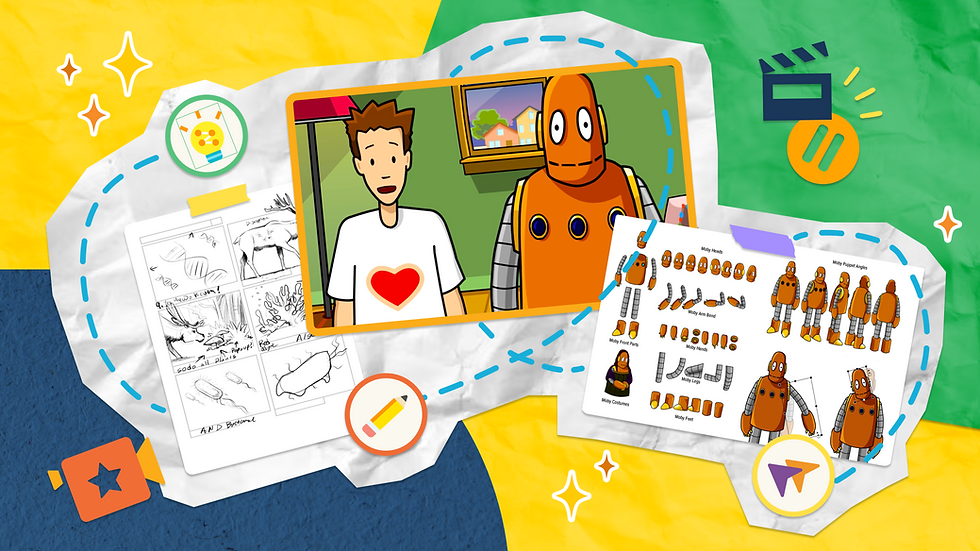
Demian: Then it's a matter of taking the script, and the research, and breaking it down into a visual structure through the storyboard; deciding things like scene breakdowns, compositions, and figuring out how much we're going to show in one visual, or what's the clearest way to show an idea.
Mike: Like Demian said earlier, you have to really understand something in order to nutshell it in a visual way. If you look at an aerial photo of a city, you just see a lot of textures and colors, and you can’t tell what anything is…but then you see a map, and things are color-coded and simplified to the point where they’re super clear. BrainPOP animations are like that—and that comes from the research and work during the storyboard phase.
I'd consider the storyboard almost like a blueprint when you're about to build a building.
Caroline: It's as simple as it can get—just showing off what could potentially be in the movie. That's where we'll find things that maybe won't work narratively or comedically. It's supposed to be a preview of what's to come. You don't want to make an entire movie and then realize it doesn't work.
Animation and Timing: Working Towards a Finished BrainPOP Movie
The Animation Stage: Movement with Puppet Animation
Tell us about the animation part of the process—how do things move from loose to finalized?
Caroline: Once we get past the storyboard phase and know what we want to change and adjust, we set the stage—to get that "perfect first frame," where no one's really moving. At this point, we time things out, but there's very minimal animation. It's like another screening process to see if something should be cut or adjusted before you get too far into the animation process.
After a review process, we start integrating smoother movements and lip syncing, and really completing the movie.
How do you go from the “perfect first image” to making everything move?
Caroline: We do puppet animation. The way I always describe it is like having a paper doll with all of these moving pieces. If I wanted to make Tim wave his arm, I basically have his forearm, his hand, his shoulder—I'd make one keyframe with his hand up, another keyframe down, and then in-betweens fill in the motion.
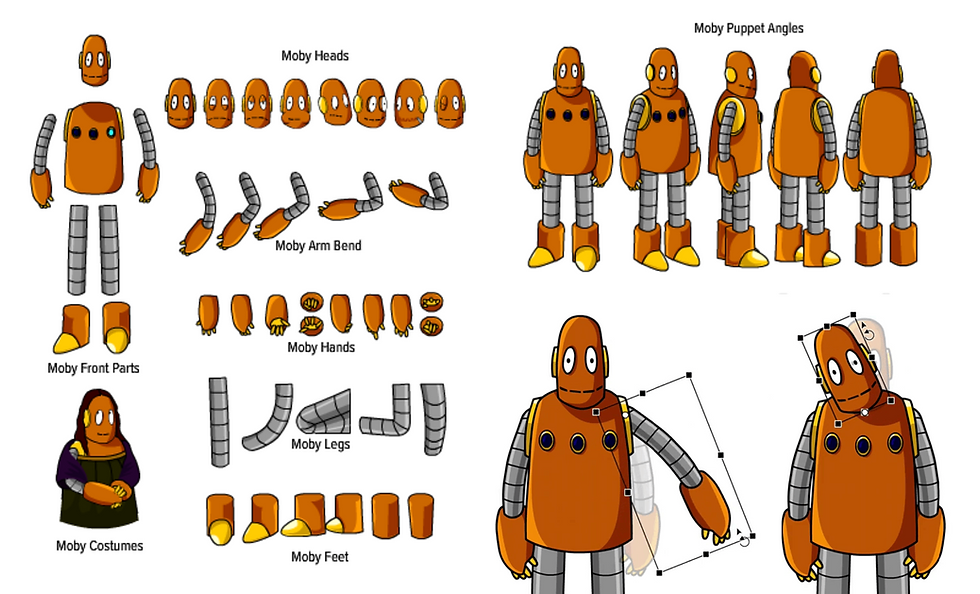
That's how animation works: keyframe A, keyframe B, and in-betweens. . It's like having a digital paper doll. It's a flat 2D space, but you can trick it into a 3D space by how we've drawn Moby's angles and Tim's angles—they can move in a way that looks natural even though it's a flat drawing.
We have tools that will automatically generate those in-betweens. But if you want to do something more complex with the puppet, you hand-animate it—do it the traditional way.
The Power of an Animated Pause: Timing, Cadence, and Rhythm
What is your goal during this part of the process?
Demian: As Caroline alluded to, we spend a disproportionate amount of time fussing over timing, cadence, and rhythm. The proper length of a pause can really do a lot to either help a joke land or help an idea stick. Those kinds of pacing considerations end up being a very large part of what we evaluate as we're making a movie.
Love the idea that a pause is both good for humor and helping an idea land. Is one goal more important than another?
Demian: It’s really both—we need to illustrate the story in a way that's gonna resonate the most with how humans experience stories. That includes things like: how much information we're showing, how much time a kid might need to process that information, and how much time we want to either let a joke sit or build up a moment of anticipation. We do a lot of work to make it resonate as much as it possibly can.
Characters and Voice Acting: Expressing and Amplifying the Story
Working with Characters: Expression and Developmental Needs
Tell us about working with the characters during this part of the process.
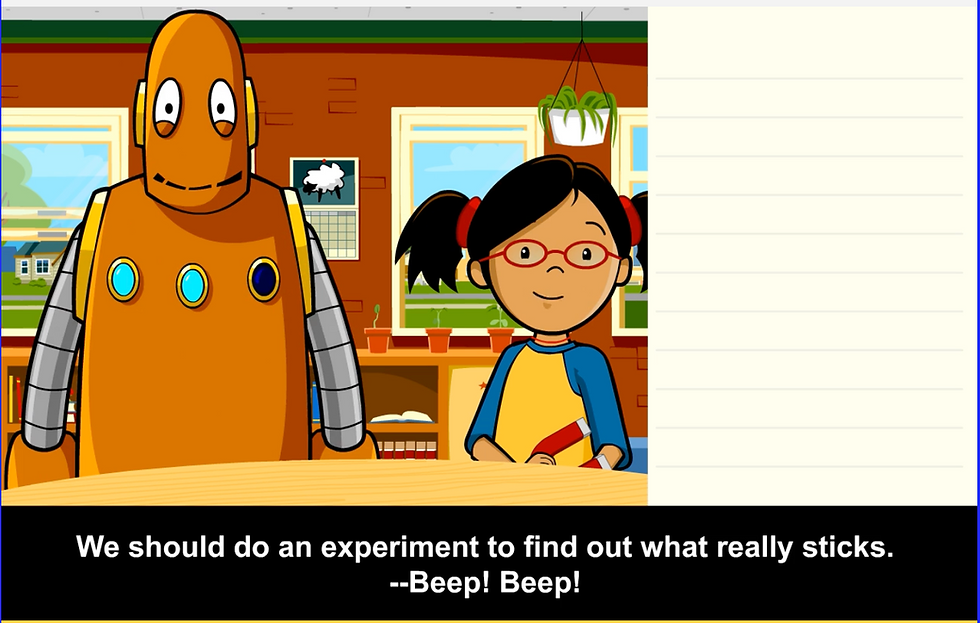
Demian: Part of bringing the script to life is bringing the characters to life—and part of bringing the characters to life is amplifying the inherent quality in the voice narration through visual expression.
We make choices about how much expression to give a moment, how long to hold on a reaction, where to put the visual emphasis.
We also keep kids’ developmental needs in mind. Moby is designed as a stand-in for the learner, but that shows up differently by age. In BrainPOP Jr., we made him more expressive because emotional cues play a bigger role in how younger kids process what they’re learning. In BrainPOP (for grades 3–8), he’s more intentionally neutral so that kids can project their own thinking onto him.
Caroline: Storytelling is the consistent thread—using a story to keep kids engaged throughout and making it feel less like they're absorbing information and more like they're experiencing a story.
The Voice Acting Phase: Cementing the Connection with Kids
Mike, tell us about the voice acting component.
Mike: If you don't understand the script, no one listening will, either.
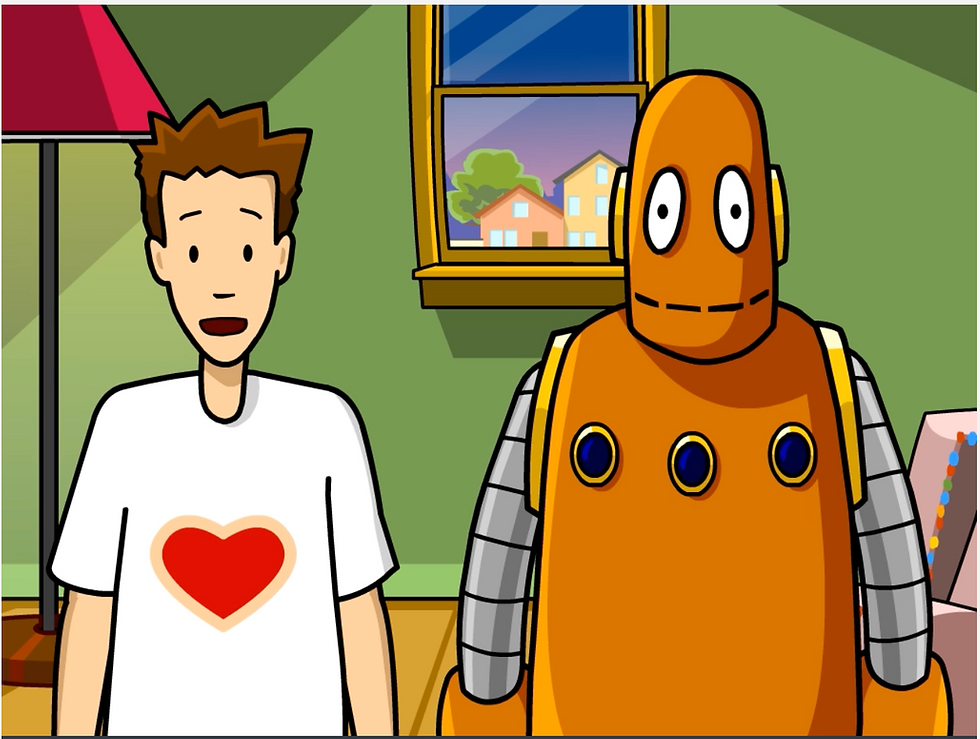
You also have to think about your audience. I mean, really visualize them. First bit of advice I give our voice actors: pretend you’re explaining to someone you really care about.
That way, you’re really invested in their understanding—you’re working to bring them along for the ride.
I started by visualizing my youngest sister, when she was maybe 10. Siblings are easy to lose. They get bored easily. There’s a little bit of an art to being heard.
How do you think that feeling of having a one-on-one conversation affects the final result?
Mike: It becomes a one-on-one conversation between the person who asked the question and the character, and everyone else is kind of listening in.
Teachers have to speak to everyone—they have to look around the room and speak in the plural second person, because it’d be weird if they didn’t. Kids in school aren’t expected to be given this much attention, or they’re not expecting it. But when you answer one kid’s question, it makes that kid feel special—like they got picked.
The End—or Is It?
After a BrainPOP movie is done, a few things happen.
The learning design team adds an assortment of learning activities to deepen learning and hone students' critical thinking skills!
It goes right into your classrooms! Check out how all of these educators love to use BrainPOP.
AnnaLiese Burich is a Product Marketing Manager at BrainPOP. In addition to holding an MA in Magazine Journalism and an MA in English Literature, she has worked in (and written for) the edtech space from every angle: from parenting tips and children's activities to classroom strategies and district goals. AnnaLiese's favorite BrainPOP character is Tim.


Comments