How BrainPOP Turns Academic Research into Stories Kids Remember

BrainPOP movies are short, educational, animated movies under 10 minutes that teach students about topics across the curriculum. At least, on the face of it.
But teachers have also been known to say things like: “My students are more engaged, and retain a lot more”, “They hear the information better from Tim and Moby than from me,” and even: “[BrainPOP has] a deeply informed sense of how to convey subtleties without droning on and on. Irreplaceable.”
How is it that animated educational movies are so remarkable? There’s a lot that goes into BrainPOP—and what makes it “irreplaceable.” Making a BrainPOP movie is like a relay race: the the learning design team unpacks a topic and its goals, the editorial team writes the script, and the animation team (and voice actors!) bring it to life. And, undergirding it all, is the foundation of learning science that makes learning from animated movies stick.
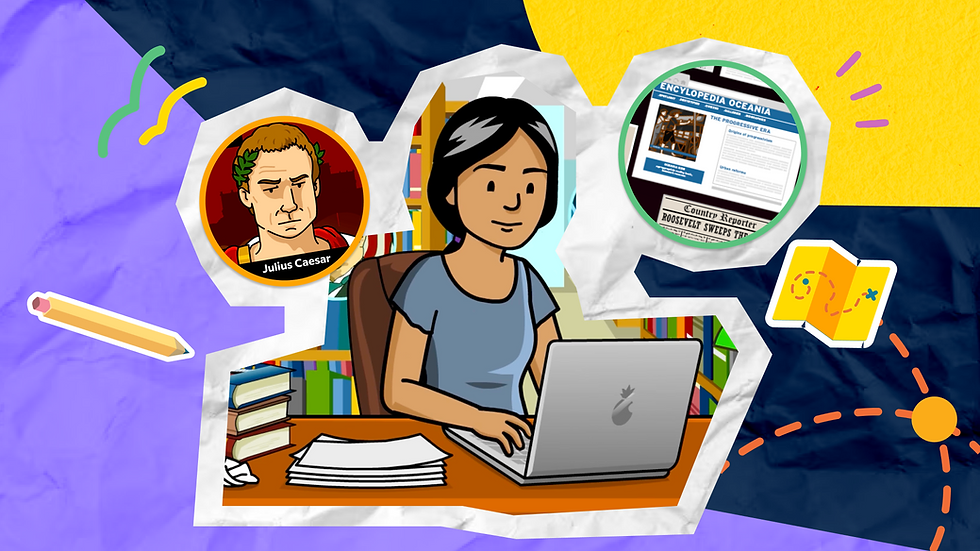
But one theme that comes up—again and again—is that the information presented is memorable, funny, nuanced (yet straightforward!), and engaging for kids. For that, you can thank BrainPOP’s editorial team. They’re the team that takes a whole history’s worth of scholarly research on a topic and shapes it into a few short words that kids not only understand, but remember.
Curious how they do it? Let’s take a peek behind the scenes and hear from them directly about what goes into creating a BrainPOP script.
Why Writers Have to Understand a Topic at a College Level to Explain It at a Kid Level
BrainPOP movies all start with a letter—one that captures kids' innate curiosity and tendency to ask the most complex questions (and needing a straightforward answer).
This curiosity is the start of the editorial team's process, too.
“We're trying to inspire our viewers to get interested in the topic,” Jon Feldman, VP Editorial Director of BrainPOP, explains. ”In order to do that, the writer has to be truly interested in it. Their enthusiasm for the topic will come through.”
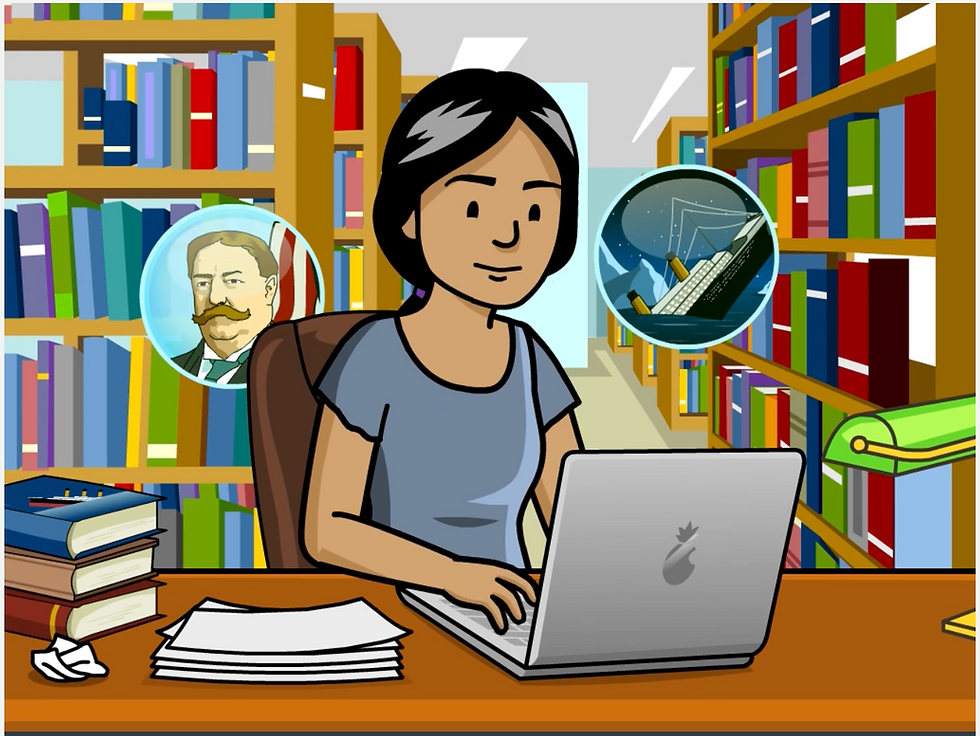
How do they get that enthusiasm? “Writers go deep on the research, wrestling with the topic until we understand it so well that we can shape it to fit into the story we want to tell,” he says. “To explain something compellingly at a middle school level, you have to understand it at a college level. Basically, our job is to be the students we're trying to create."
We sat down with Jon and two members of his team—Tamara Fisch, Senior Editor, and Sandy Fernandez, Senior Scriptwriter—to walk through their process, their challenges, and how they try to crack the nut of explaining complex topics to kids.
Behind the Scenes: Explaining Complex Topics to Kids Through Narrative
The Research Stage
Q: Walk us through the beginning stages of scriptwriting. What happens when a new topic comes across your desk?
Tamara: We do research to master the topic at the level of a scholar—to the extent we can. We read scholarship, and our expert advisers are scholars in the field. For Hammurabi's Laws, for example…I talked to a historian who had written a new book; she got me the most current I could possibly be.
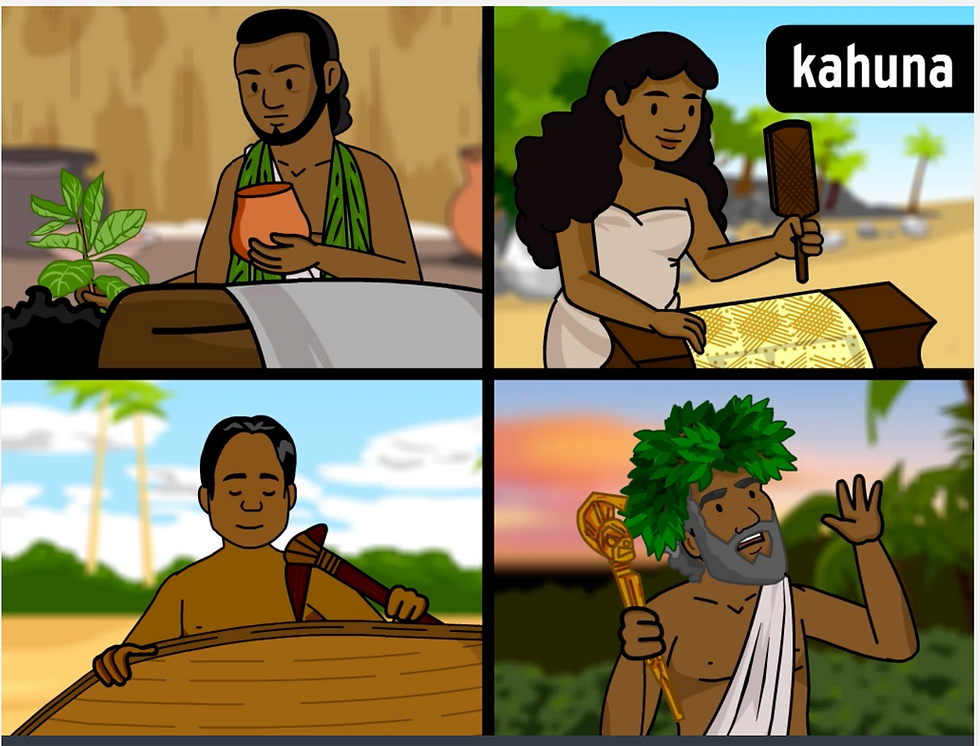
For the [Ancient Hawaii and Queen Lili’uokalani] movies, I ended up talking to the Hawaii State Archivist.
I got to him through the University of Hawai'i at Mānoa’s Hawaiian history department. We try to figure out: where is the real expertise?
We either go to universities and departments with strong programs in the subject, or we find cutting‑edge books and ask the authors to serve as advisers. Sometimes they will.
Of course, we also vet the scripts with classroom teachers to make sure what we end up with is appropriate for classroom instruction.
Sandy: Yes, we look at how something is being taught and what the real currents in academia are, so we can give teachers the most current information.
Research is always moving forward, so the way we look at things is always moving forward.
Tamara: In a way, the research phase is about acquiring too much information and then forcing ourselves to condense it. If the job of writing a script is to fit ten pounds of stuff into a one‑pound sack, the research process is getting all ten pounds.
Shaping the Research Into a Story
Tell us about that process. How do you go from ten pounds to one pound?
Jon: Academic topics often resist a narrative explanation. And explaining is only half the challenge; at their best, our movies communicate why you should be interested in a topic, inspiring viewers to learn more. Instead of a cartoon version of a textbook unit on a subject, let's make something that will motivate kids to read that textbook. So, what's the recipe?
Tamara: We have to find the main idea—just like kids have to find the main idea when they read—a story we can hang the details on like a spine, so when they forget some details, the story remains.
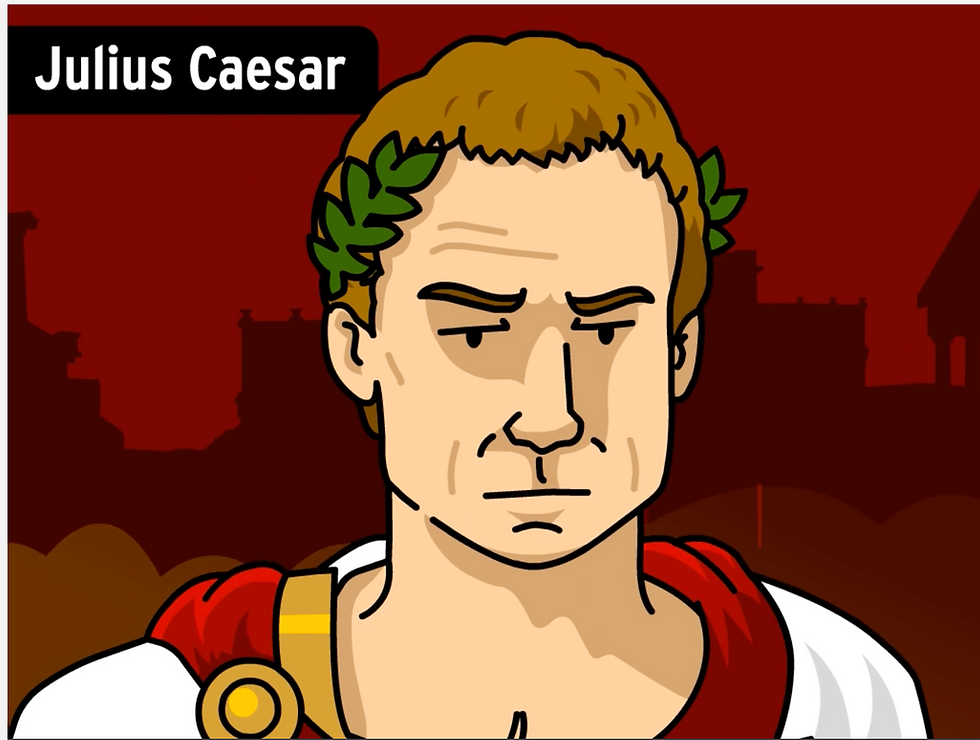
And we have to figure out how to do that in about five minutes. How do you do the Roman Empire in five minutes? You can't do it all. So what are you going to choose?
Advisers will always say, "You left out this whole thing," and we have to say, "Right, because this is not a 45-minute feature film."
That's the editorial challenge: deciding what is most important for our audience of students. For some topics, they'll encounter the topic repeatedly; for others, we might get just the one shot, so our choices really matter.
Once you find the spine of the story, how do you break it down into digestible, kid-friendly language?
Jon: Here are just a few that come to mind.
We try to write movies for kids who already like learning, and celebrate the joy of nerdiness.
We try to write about big ideas and fundamental concepts. They should offer mental models for kids to hang knowledge on, rather than laundry lists of said knowledge.
We also try to wrestle with the topic ourselves—even though our mental thrashings are likely to occur at a much higher level of understanding than the script ever addresses. Only when we’re in that state of excitement that comes from actively engaging with a topic can we write a script that excites our audience.
We try to be as concise as possible. We replace long words with short ones, and long sentences with short ones, to sound conversational and off the cuff.
Tell us about the jokes. Why is it important to have humor in education?
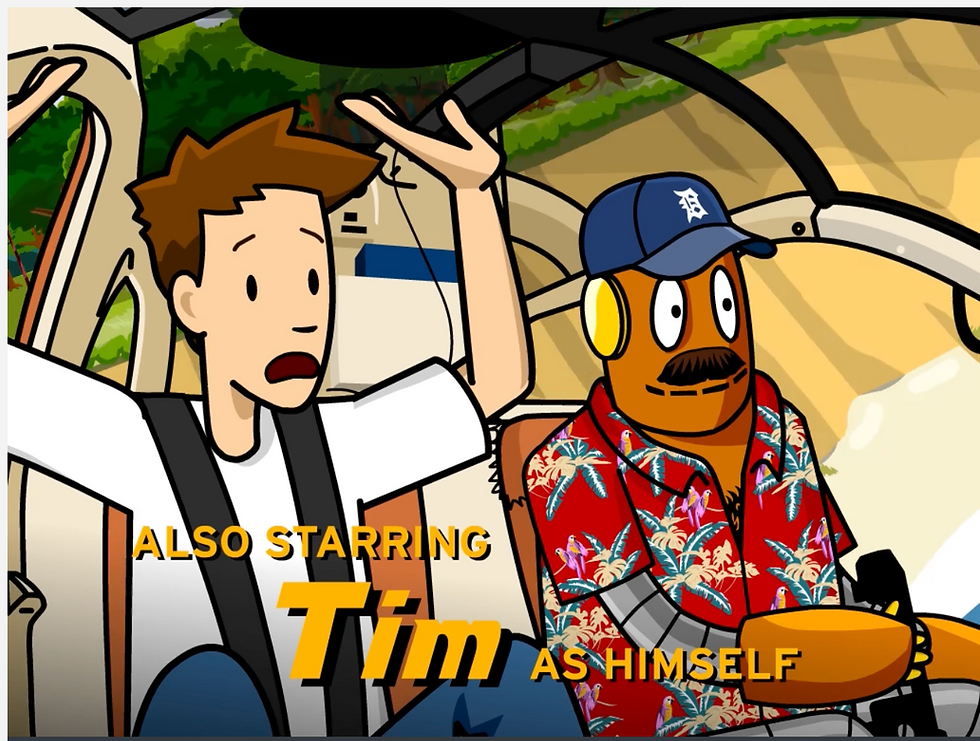
Sandy: We use humor to sometimes break tension, sometimes re‑engage the audience—the jokes are really important to the movies.
We’ve all watched those, even if it’s a ten‑minute or five‑minute documentary, where it’s just like ‘wah wah wah.’ It’s hard to get through. Humor helps that.
Jon: Sometimes just the scenario we create is itself humorous—putting kids in adult roles, for example, and hilarity ensues because of that. The humor isn't always a punchline; it's often the entire structural conceit.
At the end, we need some form of closure, but we also want the narrative to be memorable. We often use humor—not just to make it engaging and satisfying, but to help with memory, reinforce what they just learned, and help it stick.
Tamara: Figuring out the jokes is where we really collaborate with the animation team. We often come together on the intros and outros—that's where we get to put in our references to movies we loved as kids, or deep cuts only teachers will get. We hope they entertain the kids, but a lot of it is really for the grown-ups: jokes for kids, jokes for adults.
Passing the Baton To the Animation Team
Storyboarding and the Animation Team's Research
What happens when a script is done?
Tamara: We send the animation team the script, with our suggestions for visuals. They read through it and see if they have any questions, and they begin the storyboard process.
Sandy: That’s where they’re expressing their ideas, and where the stakes are lowest—it’s easiest to make changes at that stage.
Tamara: Some of them bring in their own research in this amazing way—like, “I found this awesome detail,” and you’ll see things you had in your research and didn’t make it into the script show up in their visuals.
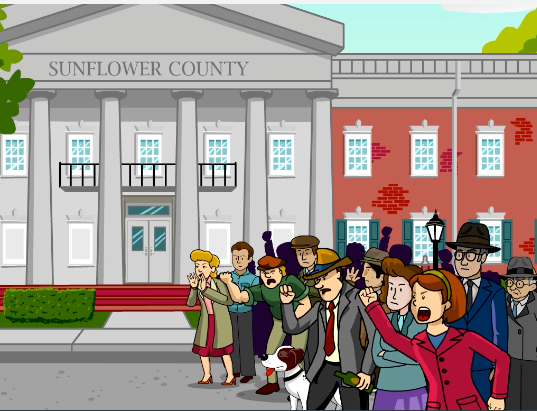
Sandy: One example is Fannie Lou Hamer. [The animator] put Sunflower County on the courthouse in the scene, even though we hadn’t mentioned it. She did it with Women’s Suffrage, too. Certain details I just couldn’t get in—I always think, “Oh my god, there’s that symbolic thing,” because she’ll look it up and she knows.
Want to Learn More?
Learn more about the animation process—from the moment they receive the final script to the moment the animation team has put its last theatrical flourish on the movie—to create learning that illustrates even the hardest of concepts and connects with every student.
AnnaLiese Burich is a Product Marketing Manager at BrainPOP. In addition to holding an MA in Magazine Journalism and an MA in English Literature, she has worked in (and written for) the edtech space from every angle: from parenting tips and children's activities to classroom strategies and district goals. AnnaLiese's favorite BrainPOP character is Tim.


Comments