Why Every BrainPOP Movie Starts with a Letter

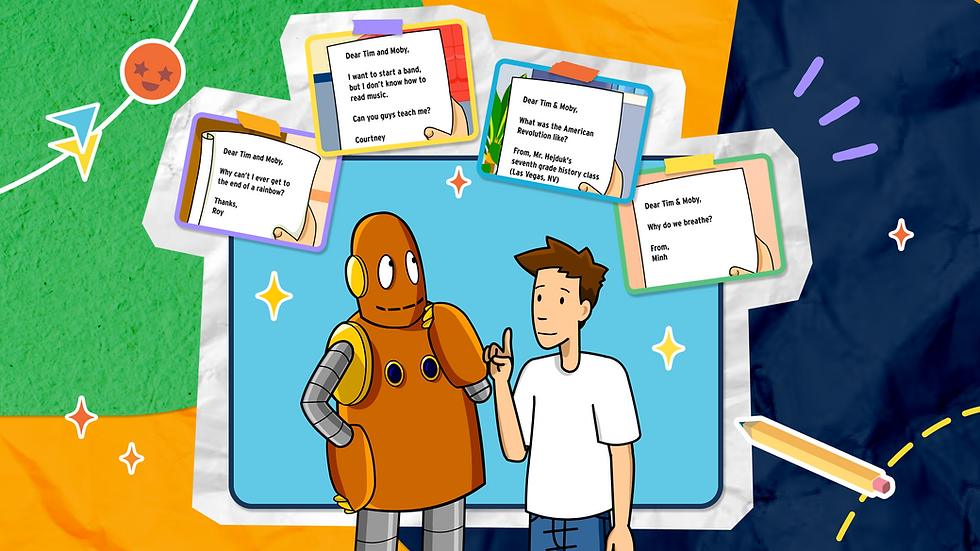
BrainPOP movies start with a letter, from a student, to Tim and Moby—or Cassie and Moby, or Rita and Moby, or whoever is with Moby that day.
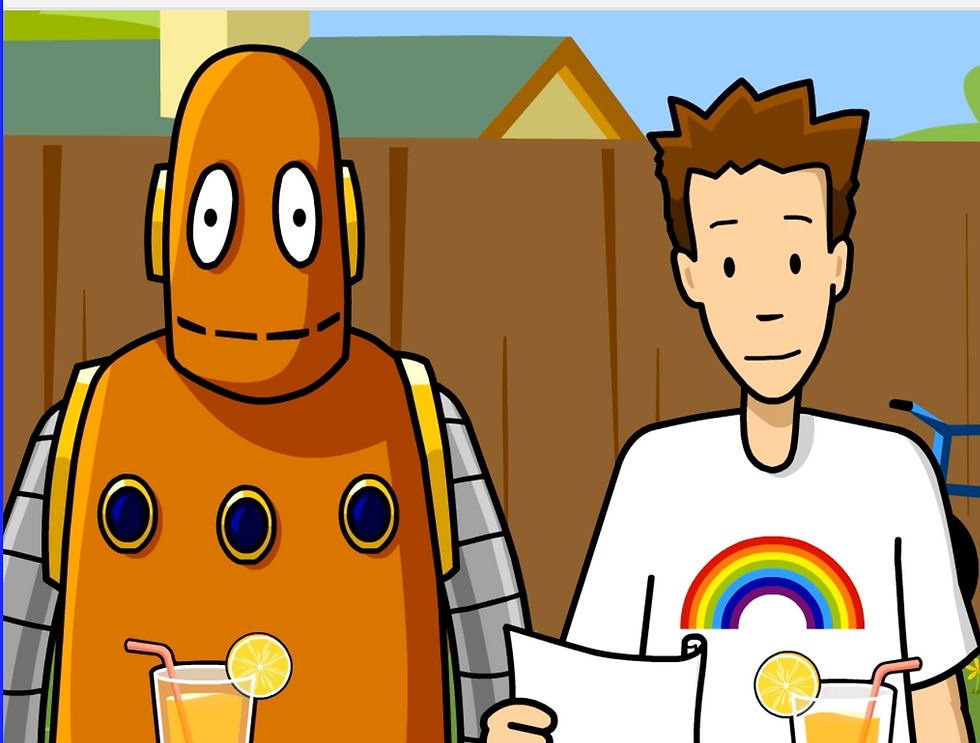
They ask big, complex questions, like “How come I can’t ever get to the end of the rainbow?” or “Why do germs make me sick?” or “What are taxes? Why do we have them?”, and are signed by a kid or class.
Ever wonder why every BrainPOP movie starts with a letter?
5 Reasons BrainPOP Movies Start With a Letter
They are questions that kids are already curious about
They’re the kind of questions that kids ask every day, and that grownups often have no idea where to start—or no idea what the answer is!—let alone how to translate it into kid-friendly language.
Think: “My sister said my body is made of cells. Is that true, and what are cells, anyway?”
They’re questions based on what kids are hearing about from other kids, or in school, or on TV, or just from observing what’s around them.
By opening with a letter, BrainPOP signals to students that they are about to learn something that they care about, and that will help them understand the sometimes-mystifying world around them.
They activate prior knowledge
From a learning science perspective, these questions also activate prior knowledge—with questions like “What are national parks? Are they just bigger than regular parks?”
By connecting upcoming learning to something they’ve learned or noticed, students comprehend more and are more engaged in the day’s topic.
The movie will go on to build even more background knowledge on the topic, but the opening question serves as the spark that primes them to learn.
They make curiosity a reward
Mike Watanabe, creator of Moby and voice of Tim, agrees with all of the above—but, as he reflects on their importance, he also wonders if the letters tap into something deeper.
“They model curiosity that is rewarded by connection with a cartoon character. Kids look at that and think, ‘I should be asking questions like that.’” he says. “We’re suggesting that it is normal, common, and really rewarding to be curious.”
They focus on the movie's plot
Mike also notes that they add focus to both the movie's plot and the kids watching it in the classroom.
Let’s think about the first one.
Sometimes, the topics that BrainPOP covers are very broad—and the script writing team is tasked with condensing them into a five-minute narrative that will resonate with kids. The opening question acts as the inciting incident of the story—it narrows the focus or provides an angle for the rest of the story to hang on.
They create a connection with each student
Mike also notes that it’s important that the letter—and the movie’s ensuing response—is from (and to) one kid.
“It gets to the heart of creating a persona on the other end of the movie—the person you're talking to,” he explains.
“It becomes a one-on-one conversation between the person who asked the question and the character, and everyone else is kind of listening in.”
That feeling makes kids feel even more connected to and invested in what they’re learning. Even though the question was asked by another kid, the character’s personal tone makes them feel that they’re speaking one-on-one to them.
Rather than being a presenter to a vast audience of 100 kids, where it might seem okay that their attention wanders—after all, who would notice?—they get the feeling that the characters really want them, specifically, to understand. And so they will.
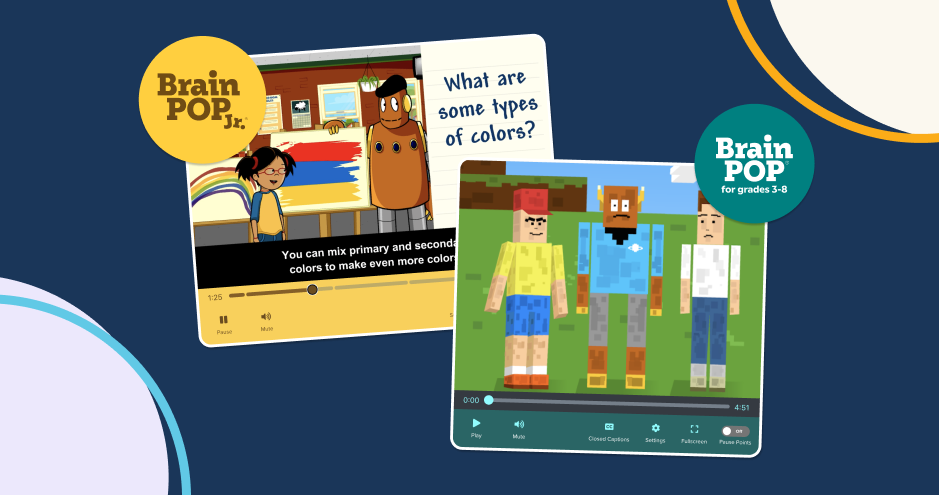
Moby has a role in this connection, too. As Demian Johnson, VP, Design Director of BrainPOP, put it: “Moby is designed as a stand-in for the learner, but that shows up differently by age. In BrainPOP Jr., we made him more expressive because emotional cues play a bigger role in how younger kids process what they’re learning. In BrainPOP (for grades 3–8), he’s more intentionally neutral so that kids can project their own thinking onto him.”
Beyond the Letter
After the letter, of course, is where the bulk of the movie magic happens.
The letter sets up the story—and the rest of the BrainPOP movie is built to tell the rest of that story, turning students’ curiosity into students’ knowledge.
And, just as there’s a ton of care and thought that went into the decision to start a BrainPOP movie with the letter, there’s a ton of hard work, research, and learning science that goes into BrainPOP’s script and visuals —all with the purpose of creating learning experiences that students understand, remember, and treasure forever.
AnnaLiese Burich is a Product Marketing Manager at BrainPOP. In addition to holding an MA in Magazine Journalism and an MA in English Literature, she has worked in (and written for) the edtech space from every angle: from parenting tips and children's activities to classroom strategies and district goals. AnnaLiese's favorite BrainPOP character is Tim.


Comments