50+ Ways to Use Concept Mapping in the Classroom

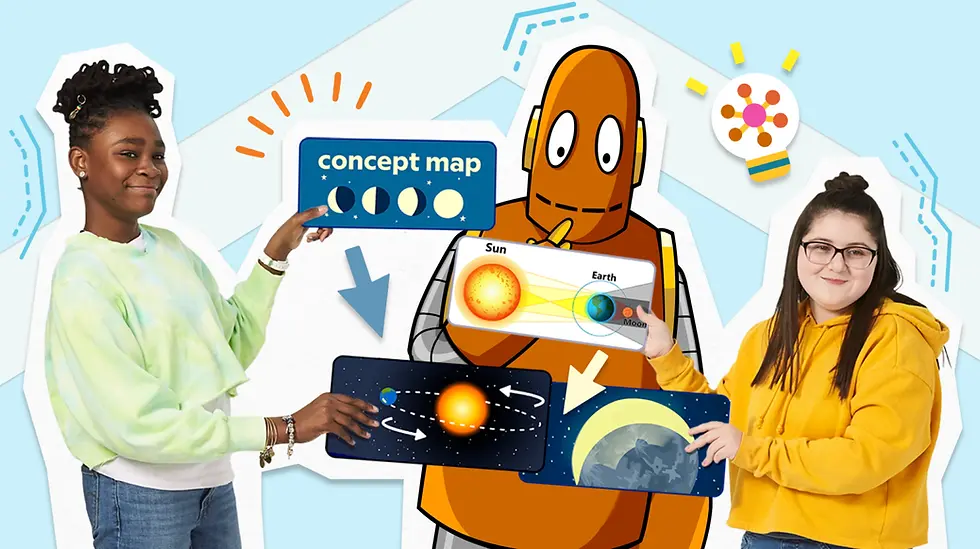
When students are constantly absorbing new information, it can feel like their brain is being tied into all kinds of knots. Concept mapping serves as a tool to neatly unravel these knots, offering a clear, visual organization of information and fostering a deeper understanding of complex topics.
As Tim and Moby explain in this BrainPOP topic, concept mapping can be used for everything from taking notes and doing research to planning out projects and making connections between ideas. They mirror how our brains store information, allowing our focus to go from remembering facts to critically thinking about them.
So, it’s no surprise that concept mapping is an invaluable tool in the classroom—for students and teachers alike! Here are 50+ ways you can incorporate concept mapping into your daily routine, starting today.
Concept Mapping In the Classroom
Assess student comprehension
Present difficult material in a step-by-step manner
Introduce a new concept
Identify similarities and differences between ideas and concepts
Help students make meaningful connections between the main idea and details
Assist cooperative groups in defining projects and dividing job responsibilities
Create flow charts for behavior plans for either the classroom or a specific student
Identify similarities between different units
Create a vocabulary organizer to record the new words they’ve learned
Identify when students don’t understand information and where the breakdown is in their comprehension
Add more depth in a compare/contrast lesson, for example, identifying the important variables by color-coding or other visual element, and then deciding if the variable is the same or different in the two objects of study
Show relationships between ideas or concepts
Assist students in organizing information (like a KWL chart! Download below.)
Provide a framework for note-taking
Create instructions for games
Create picture charts that students can follow if they are communication impaired
Help students study for a test
Create a classroom organization chart with associated responsibilities
Design a how-to or step-by-step guide for learning new software and web tools
Develop a course or workshop
Document job responsibilities
Plan a website, blog post, or presentation
Create cause/effect/solution diagrams to resolve social issues within the classroom
Provide a skeleton map and have students fill in the information
Concept Mapping In Lessons
Plot summaries
Book design elements
Illustration of the digestive system
Procedures to follow during an emergency drill such as a fire or storm drill
Lab procedure explanation
Presentation of lab conclusions and highlighting important concepts (especially prior to completing a written explanation)
Local government diagram
Detailed processes map (how to add polynomials etc.)
Storyboards for presentations
Historical cause and effect
Organizer that shows the English word on one side and the foreign language word equivalent on the other side with pictures as hints
When studying a poem: in the center concept, list the name of the poem and the connecting lines contain phrases from the poem: the subconcept explains the words in the phrase and the literary technique used such as personification
Cycles (recycle, weather, etc.)
Food chain construction
Map of where items are stored in desk, trapper, or locker
Library orientation
Character descriptions
Plot movement and how action leads to the climax
To teach Math algorithms (especially division)
Math-problem solving (great because it is non-linear)
Concept Mapping with Faculty and Staff
Illustrate school’s goals
Plan for Parent-Teacher Organization
Explain staff responsibilities on committees
Illustrate instructional goals with links to testing expectations
Show what each grade will be teaching and how units fit into the larger picture of curriculum for the whole school
Show integration of different topics across the curriculum for a unit, lesson, or long-range plan
Personal and/or professional goals
Concept Mapping with Students' Families and the Community
Concept maps to send home to parents to help explain a unit so they can help their children study/review
Open House/Back to School night presentations
Explanations of the year’s curriculum goals
Concept mapping is an incredible tool for both teachers and students to use in the classroom. How will you map?
Jordan Bremus-Wyles is the Sr. Manager, Content & Social Media Strategy at BrainPOP, with a Bachelor's in English and Journalism. She is a youth advocate and mom of two. Jordan's favorite BrainPOP character is Tim.


Comments