Differentiation That Empowers Every Learner

Updated: Oct 1
You are preparing for an upcoming lesson and thinking about your multilingual learners.
You want them fully included in the work ahead. You want them engaging with the same rich content as their peers. But you also know how quickly support can become visible to other students in a classroom.
A different worksheet.
A separate text.
Extra steps that quietly signal: this work is not quite the same.
Teachers feel this tension every day. The goal is not just differentiation. It is making sure every learner can participate meaningfully and confidently in the same rich learning experiences.
So what does differentiation look like when it truly empowers students?
In many classrooms, it means support that is built directly into the learning experience.
Support That Starts with a Shared Experience
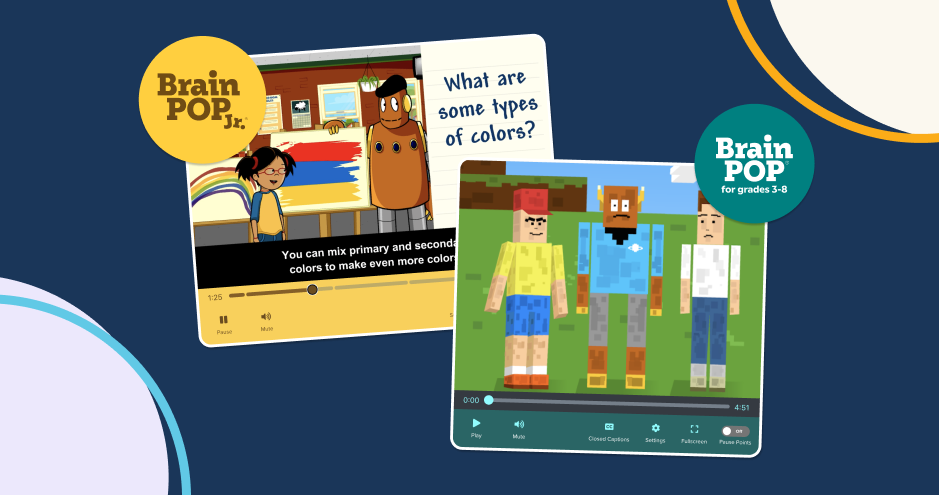
In many classrooms, BrainPOP movies provide a powerful shared entry point into new learning.
When teachers choose to begin with a short, focused animated movie, students benefit from the combination of narration, visuals, and purposeful humor. These elements naturally lower language barriers while building background knowledge for all learners. The combination of words and visuals, known as dual coding, makes complex ideas more accessible and supports the way the brain processes and retains new information.
For multilingual learners, this can mean:
Everyone builds the same content foundation
Everyone benefits from visual and audio support
Everyone enters the lesson with shared context
Closed captions are available in English, and select BrainPOP 3-8 movies are available in Spanish and French translations, allowing students to access language support seamlessly within the lesson.
As one ELL teacher in California shared:
"BrainPOP allowed my English Learners to be more brave in their work...anything with Moby is a hit, so having this available makes all my kids feel like rockstars."
Confidence starts with access, and BrainPOP movies provide that entry point.
Built-In Time to Process and Respond
BrainPOP has a dedicated product for ELL learners—but all of its products have differentiation and scaffolds baked right in for multilingual students as they're learning grade-level content.
Pause Points, the built-in prompts that appear during select BrainPOP 3-8 and BrainPOP Jr. movies, create structured moments for students to stop, think, and respond.
Every student encounters the same prompt. What varies is how they respond.
When assigned in small groups or independent work, multilingual learners can:
Select an answer
Speak their thinking
Draw a response
Write their ideas
The learning goal stays consistent while students use the mode that best supports their thinking. This flexibility helps normalize varied ways of showing understanding across the classroom.
Language Support Students Control
One of BrainPOP's most empowering tools for multilingual learners is also one of the most seamless.
Microsoft Immersive Reader is available across BrainPOP Jr., BrainPOP 3–8, and BrainPOP Science activities and assessments. Students can:
Hear text read aloud
Translate into 120+ languages
Adjust font, spacing, and color
Because this tool is available to any student at any time, learners can independently access what they need without interrupting the flow of learning.
The result is simple but powerful: more independence, more confidence, and more sustained engagement.
Multiple Ways to Show What Students Know
BrainPOP activities are intentionally designed to offer multiple pathways for expression.
In BrainPOP Jr., features like Word Play, Draw About It, and Talk About It give younger learners flexible ways to demonstrate understanding.
In BrainPOP 3-8, students may engage through Quiz, Make-a-Movie, Creative Coding, and/or Vocab Builder, depending on the instructional goal.
Because classrooms regularly include a range of response formats, multilingual learners can participate fully alongside their peers.
Reading Support That Meets Students in the Moment
Connected Texts* extend learning beyond the movie with short, high-interest passages available at multiple reading levels and supported by built-in, on-demand reading tools.
As students read, they can click unfamiliar words or sentences to access embedded AI reading scaffolds that provide just-in-time support, allowing students to maintain momentum and independence.
Meanwhile, the Reading Heatmap gives teachers clear insight into where students requested help, making it easier to:
Spot patterns in vocabulary needs
Identify concepts to revisit
Form targeted small groups
Together, these tools provide responsive support paired with actionable data, without adding to teachers' grading load.
Science Writing Scaffolds That Build Towards Independence
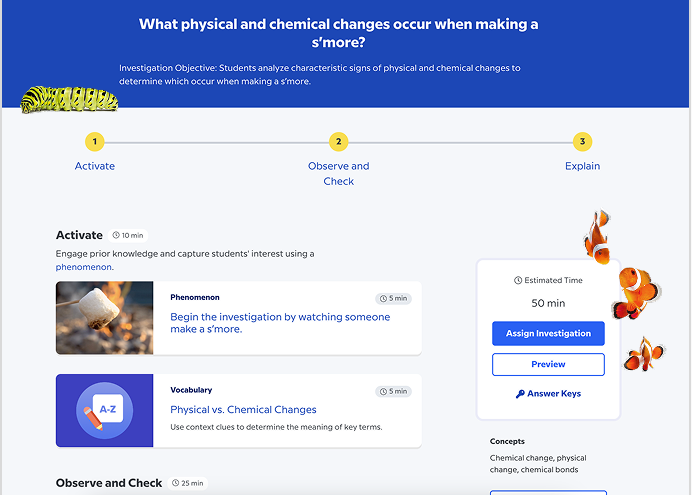
In BrainPOP Science, multilingual learners benefit from embedded Claim-Evidence-Reasoning (CER) scaffolds during Investigations.
These built-in scaffolds gradually fade as students build independence, helping them:
Organize scientific thinking
Use academic language
Build toward complete written explanations
Because the scaffolds are integrated for all learners, multilingual students can build confidence while working toward the same goals as their peers.
Rethinking What Differentiation Can Look Like
Differentiation does not have to mean different assignments for different students.
Often, the most effective classrooms keep the learning goal consistent while offering flexible ways for students to access, process, and express understanding.
BrainPOP is designed with this reality in mind. The supports are there when students need them, giving multilingual learners the tools to participate fully, work independently, and build confidence with grade-level content.
When students feel empowered, participation grows and meaningful learning follows.
Looking for dedicated English language development? Explore BrainPOP ELL.
Ready to learn more? Discover how BrainPOP supports multilingual learners.
*Connected Texts include optional AI reading scaffolds that provide students with simplified sentences and definitions for any word or sentence. All AI functionality in BrainPOP products are configurable and can be turned off to meet local needs and policies
Jackie Glassman is a curriculum designer, editor, and content strategist who creates meaningful, standards-aligned learning experiences for K to 8 students. She also authored the BrainPOP ELL movies, bringing a strong focus on supporting multilingual learners.


Comments